

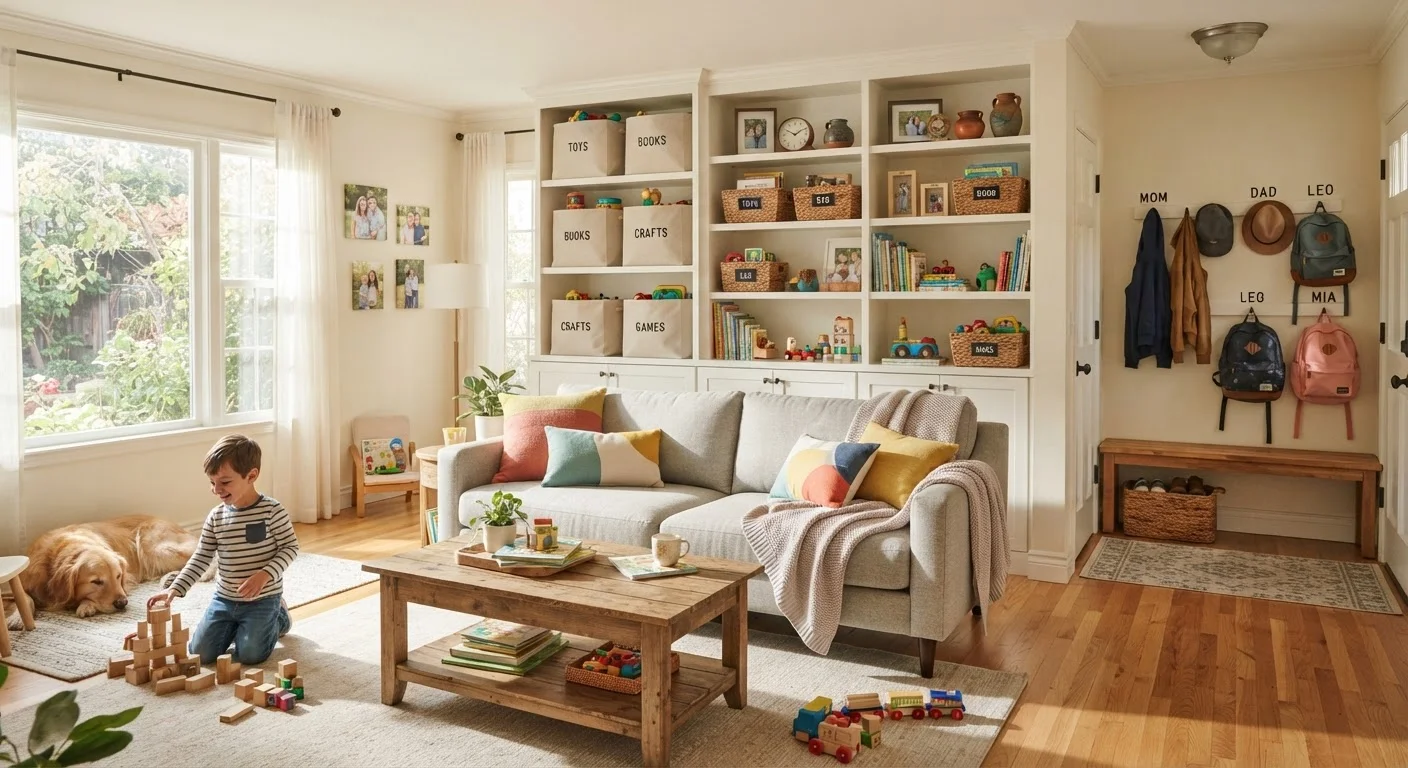
Why Family Homes Need Systems, Not Willpower
Tidiness in a home with children rarely comes down to effort or intention - it comes down to structure. When a household relies on reminders, motivation, or willpower to stay organized, the system breaks down the moment life gets busy. What actually works are low-friction habits that fit naturally into the rhythms of family life.
It's worth questioning some of the assumptions you might bring to this challenge. Common organization myths - like believing you need a full weekend overhaul or that more storage bins solve everything - can steer families toward approaches that don't hold up. The practices below prioritize consistency and simplicity over perfection.
Realistic Expectations Matter
A tidy home with kids will never look like a showroom - and that's completely fine. The goal is a functional, manageable space where things can be found and reset quickly. Aiming for 'good enough' consistently beats chasing 'perfect' occasionally. Adjust your standards to match your family's season of life.
Core Practices for a Calmer, More Organized Home
The following habits address the most persistent pain points in family households: too much stuff, unclear ownership of tasks, and systems that don't survive daily reality.
Assign every item a specific, logical home that is easy to reach and return to.
When objects have a designated spot, putting things away becomes automatic rather than a decision. Without a clear home, items pile up on the nearest flat surface because no one knows where else to put them.
Build a 10-minute family reset into the end of each day.
Small daily resets prevent clutter from compounding into weekend-long clean-up projects. Consistent short sessions are far more sustainable than infrequent deep cleans and reduce the mental load of living in disorder.
Assign age-appropriate tidying responsibilities to every child in the household.
Children who participate in maintaining the home develop ownership over the space and are less likely to dismiss tidiness as someone else's job. It also distributes the labor more fairly across the household.
Reduce the total volume of possessions before adding storage solutions.
More bins and shelves cannot fix a home that simply contains too much. Adding storage to an unedited collection just relocates the clutter. A lighter inventory makes every organizational system easier to maintain.
Design organizational systems for how your family actually behaves, not how you wish they would.
Systems built around ideal behavior fail quickly in real family life. Observing where items naturally accumulate and building structure around those patterns produces habits that stick without constant enforcement.
Do a seasonal purge of kids' belongings at least twice a year.
Children's possessions turn over quickly - clothing is outgrown, toys lose relevance, and school supplies accumulate. Without regular editing, the volume of stuff outpaces the available storage and systems collapse.
Quick Wins You Can Implement Today
Not every change requires a weekend project. These four adjustments can be made immediately and tend to produce noticeable results right away.
Making Organization Stick Long-Term
The hardest part of home organization isn't setting up the initial system - it's maintaining it through growth, seasons, and the natural chaos of family life. Revisiting your systems periodically is just as important as building them. As kids age, their needs change, and a storage solution designed for a toddler won't serve a ten-year-old.
For a comprehensive look at how organization applies to every space in your home, the room-by-room organization walkthrough offers practical strategies from kitchen to garage. And if your home improvement goals extend beyond organization, home improvement guidance covers the broader range of upgrades and maintenance that keep a family home functional.
“The objective of cleaning is not just to clean, but to feel happiness living within that environment.”
— Marie Kondo, Author and organizing consultant
Above all, build systems your family will actually use - and give yourself permission to adjust them when they stop working. A tidy home is a moving target, and that's exactly as it should be.
The content on this site is provided for informational purposes only and should not be considered a substitute for professional advice. While we strive to provide accurate and up-to-date information, we make no guarantees regarding its completeness or accuracy. Always consult a qualified professional for advice specific to your circumstances before making any decisions.