

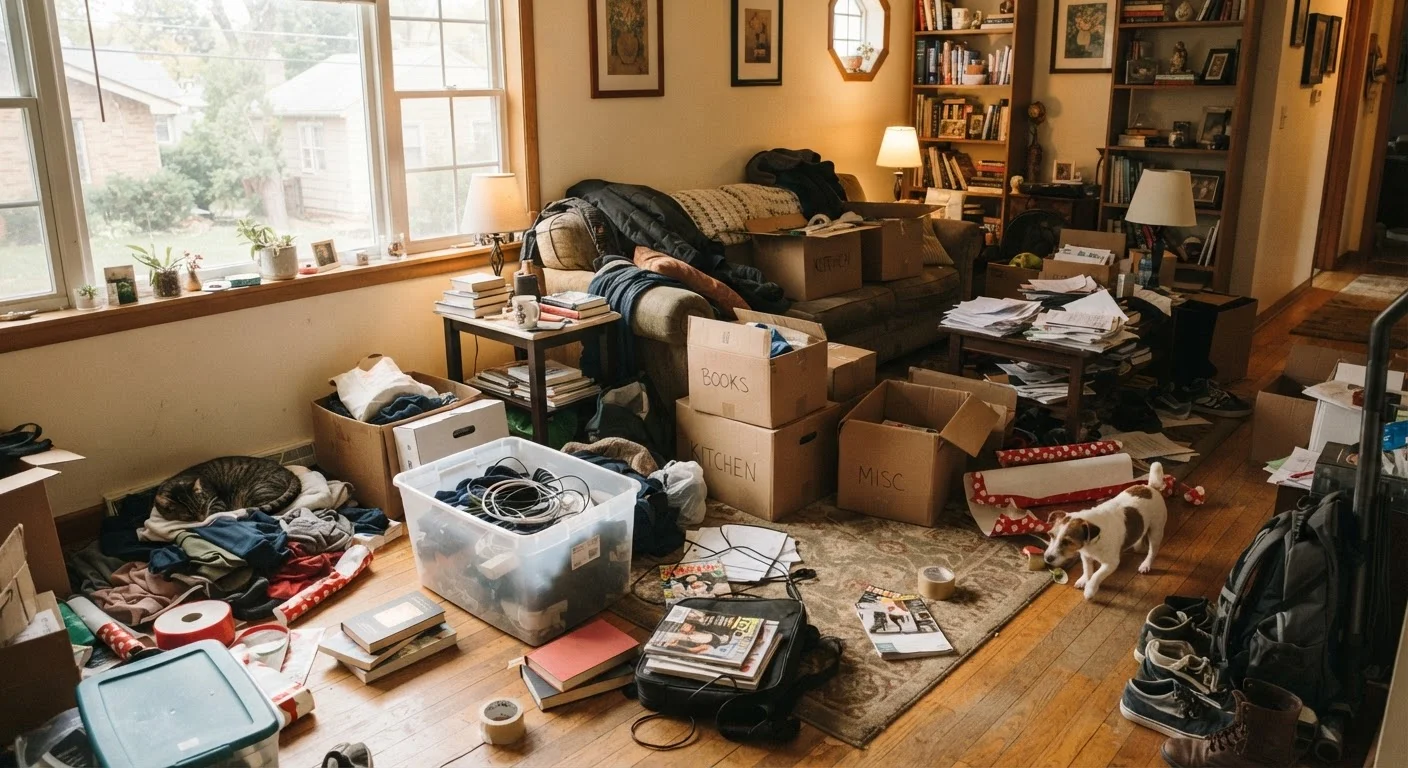
The Sequence That Most People Get Backward
Walk into any home goods store and you'll find entire aisles dedicated to baskets, bins, drawer dividers, and label makers. The implied promise is simple: buy the right container and your clutter problem disappears. It's a compelling idea - and it's also how most people end up with neatly packed bins full of things they don't need, stored in spaces that never feel quite right.
The reason is sequence. Effective home organization follows a specific order: first you reduce, then you arrange. Decluttering is not a step you can skip or defer. It is the step that makes every other step work. When you try to organize before you've edited your possessions, you're essentially designing a filing system before you know what documents you have - and how many of them should simply be shredded.
This isn't about minimalism as a lifestyle philosophy. It's about practicality. The volume and category of what you keep directly determines what kind of storage you need, how much of it you need, and where it should live. Until you know those answers, any organizational system you build is speculative at best.
See our guide to starting your first real declutter if you're not sure where to begin with the editing process itself.
Buying storage containers before decluttering.
Why it happens: Purchasing bins and organizers feels productive and gives the illusion of progress before the hard decision-making begins.
Organizing room by room without first editing the whole category.
Why it happens: It seems logical to tackle one room at a time, but similar items - books, tools, seasonal clothing - are often scattered across the house and must be evaluated together.
Treating 'organizing' and 'decluttering' as the same activity.
Why it happens: The two tasks are often discussed together, so many people attempt both simultaneously - sorting while also deciding, which leads to neither being done well.
Stopping the declutter when items have simply been relocated, not removed.
Why it happens: Moving clutter to a garage, spare room, or storage unit feels like resolution because the original problem space looks cleaner.
Decluttering once and assuming the work is done permanently.
Why it happens: A successful declutter feels definitive, but households naturally accumulate new items through purchases, gifts, and life transitions.
Why Skipping Declutter Undermines Long-Term Results
Even when people recognize the right sequence in theory, real-life pressures push them off course. Time pressure leads to shortcuts. Emotional attachment to objects makes decision-making exhausting. And the visible progress of sorting and labeling feels like accomplishment - even when the underlying problem hasn't been addressed.
80%
Of clutter stems from disorganization, not lack of space
Professional organizers commonly cite that the majority of clutter problems are rooted in too many items rather than insufficient storage capacity.
1 in 4
American households can't use their garage for a car
According to U.S. Department of Energy data, a significant share of American garages are too full of stored belongings to fit a vehicle.
The result is a home that looks organized briefly, then reverts to chaos faster than before. When everything has been shuffled into containers without first being reduced, those containers overflow. New items arrive with nowhere logical to go. The system collapses not because the person failed at organizing, but because the system was built on too much stuff.
Sustainable organization requires that your storage solutions reflect the actual, permanent volume of items you intend to keep - not the current volume of everything you've accumulated. That gap between the two is exactly what decluttering is designed to close.
It's also worth questioning some of the assumptions that make skipping declutter feel reasonable. The idea that more storage always helps, or that a single weekend is enough to fix a whole home, are addressed directly in our piece on home organization myths that keep spaces cluttered.
Once your home is genuinely edited down to what belongs, you'll be ready for the full room-by-room process covered in our complete home organization walkthrough.
Don't Let a 'Declutter Day' Become a Rearranging Day
It's easy to spend hours moving things from one spot to another and feel exhausted but accomplished - without actually removing anything from your home. If nothing leaves the house by the end of a declutter session, the session wasn't a declutter. Keep a donation box and a discard bag visible and accessible throughout the process to make removal the default action.
The content on this site is provided for informational purposes only and should not be considered a substitute for professional advice. While we strive to provide accurate and up-to-date information, we make no guarantees regarding its completeness or accuracy. Always consult a qualified professional for advice specific to your circumstances before making any decisions.