

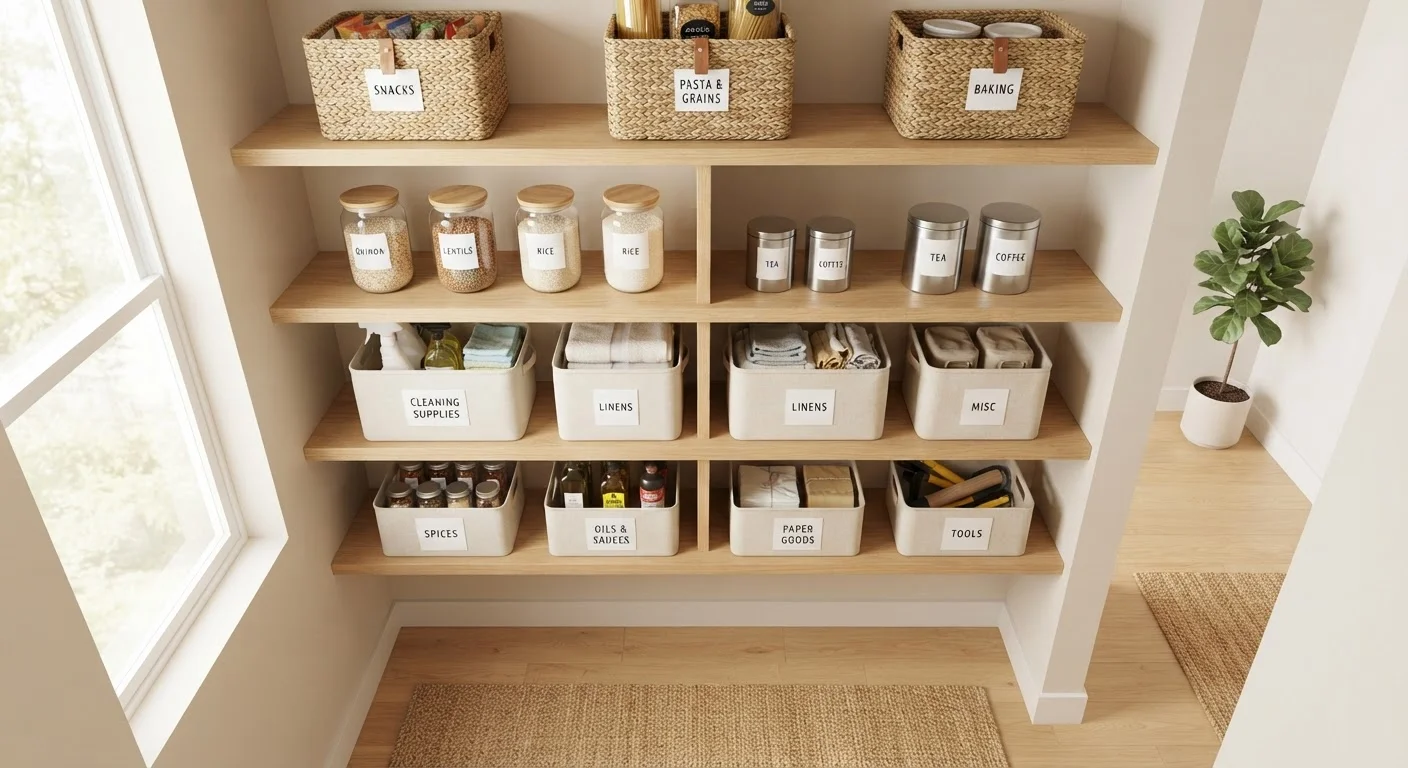
Why a Shared Vocabulary Matters in Home Organization
Home organization has its own language. When you read advice about creating a "capsule closet" or hear someone recommend a "zone system," it can feel like insider jargon - but these terms describe genuinely useful concepts that can transform how you think about your space.
This glossary defines the most common home organization terms in plain, practical language. Whether you're starting your first declutter or refining a system that already works, knowing these concepts will help you make better decisions and follow advice with confidence. For a hands-on application of these ideas, see our room-by-room organization walkthrough.
Zone System
A method of dividing a room - or an entire home - into dedicated areas based on activity or category. Each zone houses only the items related to that function, making it easier to find things and return them after use.
Capsule Closet
A wardrobe intentionally limited to a small number of versatile, coordinating items. The goal is to reduce decision fatigue and ensure that everything you own gets worn regularly.
Decluttering
The deliberate process of removing items from a space that are no longer useful, meaningful, or actively used. It is distinct from cleaning, which addresses dirt, and from organizing, which arranges what remains.
One-In-One-Out Rule
A maintenance habit where every new item brought into the home requires removing an existing item of the same category. It prevents gradual accumulation over time without requiring periodic large-scale purges.
Prime Real Estate
The most accessible storage locations in any given space - eye-level shelves, front-of-drawer positions, or the nearest cabinet to a work area. Best reserved for the items you use most frequently.
Decision Fatigue
The mental exhaustion that results from making too many choices. In home organization, clutter and disorganized storage increase the number of micro-decisions required each day, draining mental energy over time.
Anchor Point
A fixed, consistent location for a commonly used item, such as a hook for keys or a tray for mail. Anchor points reduce the time spent searching and help items get returned to the same spot habitually.
Negative Space
Empty, unoccupied areas within a room or on a shelf. In organization, intentional negative space reduces visual clutter, makes cleaning easier, and creates room for new items without overcrowding.
Category Grouping
Storing items together based on what they are rather than where they were found. For example, keeping all batteries in one location regardless of which room uses them most.
Sentimental Clutter
Items kept primarily due to emotional attachment rather than active use or practical need. Managing sentimental clutter typically requires different decision criteria than evaluating everyday household items.
Vertical Storage
Using wall height - through shelving, pegboards, stacking, or hanging - to expand storage capacity without increasing the footprint of furniture or bins on the floor.
Maintenance System
The ongoing habits and routines that keep an organized space from reverting to disorder. A maintenance system is distinct from an initial organizing project and is what sustains results long-term.
Putting the Terms Into Practice
Understanding these concepts is most valuable when they connect to real habits. A few principles that tie many of these terms together:
- Start with decluttering before adding storage. The one-in-one-out rule and the decision fatigue concept both point to the same truth: fewer items are easier to manage than more bins.
- Design around how you actually behave. The anchor point and prime real estate concepts remind you to place things where you naturally reach, not where you think you should.
- Use zones to create predictability. When everyone in a household knows that craft supplies live in one zone and paperwork in another, maintenance becomes automatic rather than effortful.
If any of these terms challenge assumptions you've held about getting organized, our article on common home organization myths explores those misconceptions in depth. And when you're ready to reset a specific room, the seasonal declutter checklist gives you a room-by-room plan to act on these ideas immediately.
| Core Organization Method | Zone System |
| Most Overlooked Principle | Maintenance system over one-time organizing |
| Terms Defined in This Glossary | 12 key concepts |
| Starting Point Recommendation | Declutter before adding storage solutions |
The content on this site is provided for informational purposes only and should not be considered a substitute for professional advice. While we strive to provide accurate and up-to-date information, we make no guarantees regarding its completeness or accuracy. Always consult a qualified professional for advice specific to your circumstances before making any decisions.