

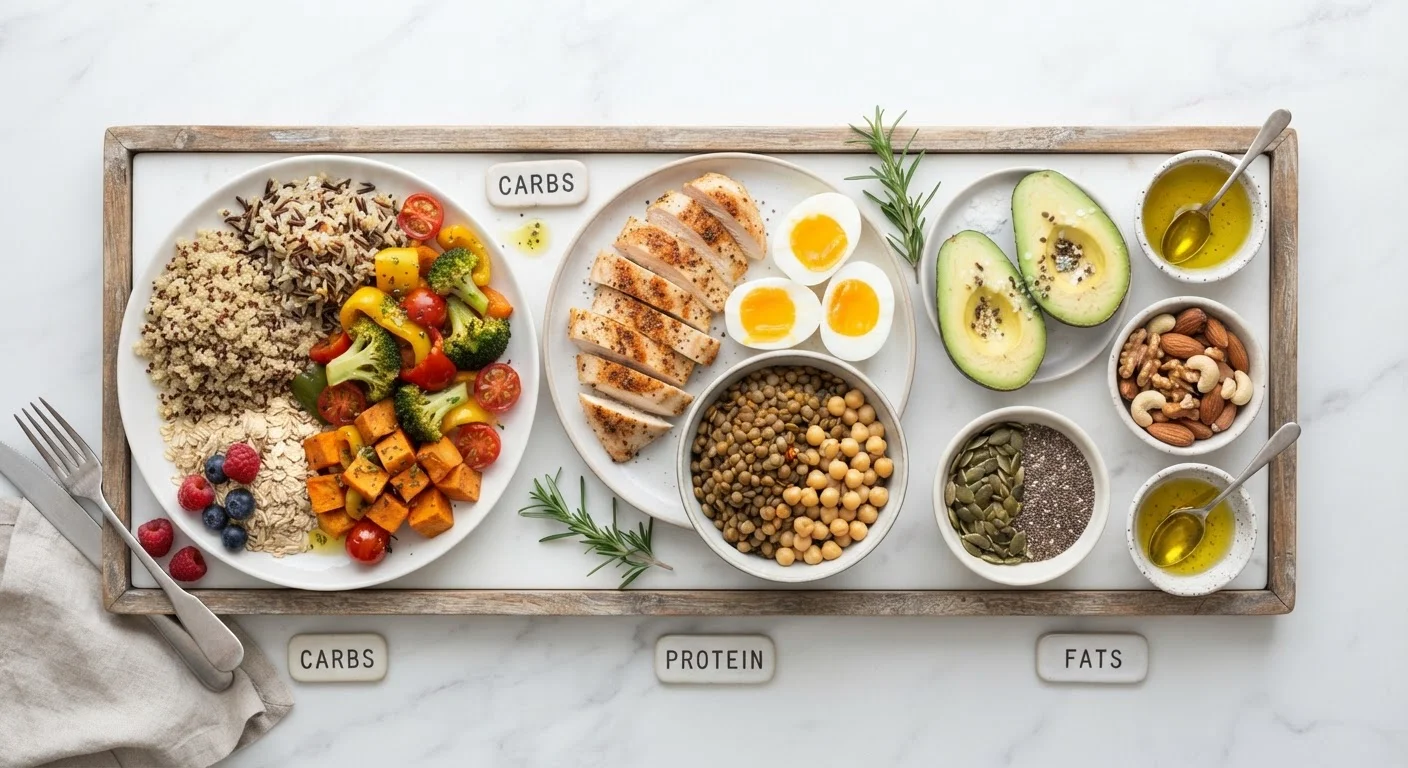
Carbohydrates: Your Body's Primary Fuel Source
Carbohydrates often get an unfair reputation, but they are actually your body's preferred energy source. When you eat carbs - whether from oatmeal, sweet potatoes, or fruit - your digestive system breaks them down into glucose. That glucose enters your bloodstream and powers everything from your muscles during a walk to your brain as you read this sentence.
Not all carbohydrates work the same way. Complex carbohydrates, found in whole grains, legumes, and vegetables, digest more slowly, providing sustained energy and valuable dietary fiber. Simple carbohydrates, such as those in table sugar or white bread, digest quickly and can cause sharper spikes in blood sugar. For most people, leaning toward complex carb sources supports more stable energy throughout the day.
Fiber - a type of carbohydrate your body cannot fully digest - deserves special mention. It supports digestive health, helps you feel full, and plays a role in managing blood sugar levels. Most Americans fall short of recommended fiber intake; our guide to dietary fiber goes deeper on why it matters and how to get more.
Choose Your Carb Sources Wisely
Rather than avoiding carbohydrates altogether, focus on the source. Whole grains, fruits, legumes, and starchy vegetables deliver carbs alongside fiber, vitamins, and minerals. Heavily processed foods with added sugars tend to provide energy with little additional nutritional value. Small shifts - like swapping white rice for farro or choosing whole fruit over juice - can meaningfully improve carbohydrate quality without eliminating a macronutrient your body genuinely needs.
Protein: The Body's Builder and Repairer
Protein is made up of smaller units called amino acids - think of them as a set of building blocks your body uses constantly. Of the 20 amino acids involved in human nutrition, nine are considered essential, meaning your body cannot make them on its own and must obtain them through food. Complete protein sources, such as eggs, meat, fish, dairy, and soy, supply all nine essential amino acids. Many plant foods provide protein too, and combining varied plant sources across meals can meet your full amino acid needs.
Beyond building muscle, protein is central to immune function (antibodies are proteins), enzyme production, and the creation of hormones like insulin. It also contributes to feelings of fullness, which is partly why higher-protein meals tend to be satisfying.
~17%
Body weight that is protein in an average adult
According to general physiology references, protein accounts for roughly 15-20% of total body mass, underscoring how structurally central it is beyond just diet.
9
Essential amino acids humans must obtain from food
The National Institutes of Health identifies nine amino acids as essential because the human body lacks the metabolic pathways to synthesize them independently.
Protein needs vary based on age, activity level, and health status, so general population averages may not apply to your specific situation. A registered dietitian can help you calibrate intake for your circumstances.
Fat: Essential, Misunderstood, and Worth Rehabilitating
Dietary fat spent decades being cast as a dietary villain, but the science tells a more nuanced story. Fat is essential for absorbing the fat-soluble vitamins A, D, E, and K. It forms the structural layer of every cell membrane in your body, supports brain health (roughly 60% of the brain's dry weight is fat), and is the raw material for many hormones.
The type of fat matters more than the total amount. Unsaturated fats - found in olive oil, avocados, nuts, seeds, and fatty fish - are associated with cardiovascular and metabolic health benefits in research. Saturated fats, predominant in red meat and full-fat dairy, have a more complex relationship with health that ongoing research continues to examine. Trans fats, which were largely artificially produced through partial hydrogenation, have been associated with increased cardiovascular risk and are now largely removed from the U.S. food supply. For a deeper look, see our evidence-based breakdown of fat types.
Because fat provides more than twice the calories per gram compared to carbs or protein, portion awareness can be useful - but eliminating fat entirely is neither advisable nor necessary.
Balance, Food Quality, and the Bigger Picture
Understanding macronutrients individually is useful, but real-world eating is about how they work together. A balanced meal typically combines all three - think a grain bowl with brown rice (carbohydrates), grilled salmon (protein and fat), and roasted vegetables drizzled with olive oil (fat and fiber). This combination slows digestion, steadies blood sugar, and keeps you satisfied longer.
No single macronutrient ratio works universally for everyone. Factors like age, activity level, metabolic health, and personal preference all shape what balance looks and feels best for you. The most consistent finding across nutrition research is that diet quality - choosing whole, minimally processed foods across all three macronutrient categories - matters far more than precise gram counting for most people.
If you find nutrition labels confusing when trying to assess macronutrient content, our plain-language guide to nutrition labels can help. And for a grounded look at how the calories in these macronutrients fit into daily energy needs, see Understanding Calories: Energy Balance in Plain Terms.
“The science of nutrition is not about identifying the perfect macronutrient ratio - it's about helping people understand how food nourishes them so they can make choices that fit their lives.”
— Marion Nestle, Professor Emerita of Nutrition, Food Studies, and Public Health, New York University
This article is for general informational purposes only and is not a substitute for professional medical or nutritional advice. Consult a qualified healthcare provider or registered dietitian for guidance specific to your health needs.
Frequently Asked Questions
The three macronutrients are carbohydrates, protein, and fat. They matter because they are the primary sources of energy and the raw materials your body uses for virtually every physiological process, from muscle repair to hormone synthesis to brain function.
Most people do not need to meticulously track macronutrients. Focusing on a varied diet rich in whole foods - vegetables, legumes, lean proteins, healthy fats, and whole grains - naturally provides a reasonable macronutrient balance. Tracking can be a useful tool for specific goals, but it is not required for general good health.
Carbohydrates are not inherently bad. The type and source matter considerably - whole grains, fruits, legumes, and vegetables provide fiber and nutrients alongside carbs, while heavily processed foods often deliver refined sugars with little nutritional value. Context and overall diet quality are what count.
General dietary guidelines suggest approximately 0.8 grams of protein per kilogram of body weight per day for sedentary adults, though needs vary with age, activity level, and health status. Individual requirements differ, so consult a registered dietitian or healthcare provider for personalized guidance.
Dietary fat is essential, not something to eliminate. Fat supports brain health, hormone production, and the absorption of vitamins A, D, E, and K. The focus should be on the type of fat - unsaturated fats found in nuts, olive oil, and fish are associated with better health outcomes than high intakes of trans fats.
Macronutrients are needed in large quantities and provide energy; they are carbohydrates, protein, and fat. Micronutrients - vitamins and minerals - are needed in smaller amounts but are equally vital for health. Learn more in our <a href="/health-wellness/nutrition-basics/micronutrients-the-vitamins-and-minerals-your-body-relies-on">guide to micronutrients</a>.
The content on this site is provided for informational purposes only and should not be considered a substitute for professional advice. While we strive to provide accurate and up-to-date information, we make no guarantees regarding its completeness or accuracy. Always consult a qualified professional for advice specific to your circumstances before making any decisions.