

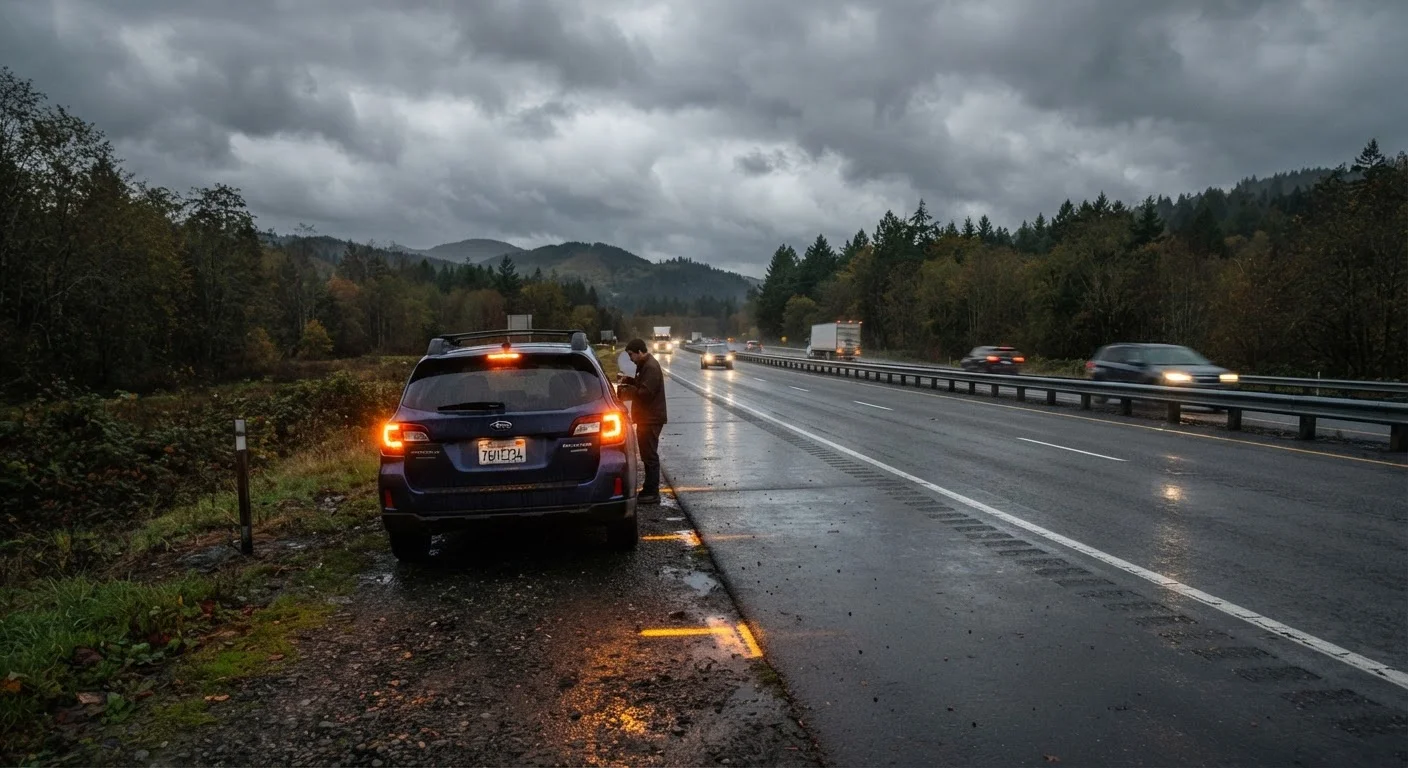
What Hazard Lights Are Actually For
Hazard lights - the four-way flashers that activate all four turn signals simultaneously - are designed for one core purpose: alerting other drivers that your vehicle poses an unexpected hazard or obstruction. They're not a general-purpose communication tool, and treating them as one creates real safety problems.
| Primary purpose | Alert others to a stopped or hazardous vehicle |
| Effect on turn signals | Disables them - hazards override all directional signals |
| Moving vehicle use | Varies by state - many states prohibit use while in motion |
| Best alternatives in rain | Headlights on low beam; maintain safe following distance |
| Legal standing | Hazard lights do not authorize illegal parking or stopping |
The legal rules around hazard light use vary by state, but the underlying principle is consistent: they signal a stationary or slow-moving vehicle that is creating a potential danger to traffic. Knowing the difference between appropriate use and common misuse can make you a clearer, safer communicator on the road. As part of your overall driving safety habits, it's worth reviewing your vehicle's lights before every trip - see our pre-drive safety walkthrough for a useful checklist.
Situations Where Hazard Lights Are Appropriate
There are clear, widely accepted scenarios where activating hazard lights is the right call:
- Vehicle breakdown or mechanical failure: If your car stalls, loses power, or becomes undriveable, pull as far off the road as safely possible and activate hazards immediately. This is the textbook use case.
- Changing a tire on the roadside: Whenever you're stopped outside the vehicle on or near a travel lane, hazards help oncoming traffic identify your position well in advance.
- Sudden traffic stoppage ahead: On a highway where traffic has come to a near-complete stop, briefly flashing hazard lights warns drivers approaching from behind - particularly in low-visibility conditions. Turn them off once traffic is moving.
- Severe weather visibility: In dense fog, heavy snow, or extremely low-visibility conditions, some drivers use hazards while moving very slowly. Check your state's specific laws on this - a number of states prohibit hazard use while a vehicle is in motion.
- Loading or unloading in a no-parking area: When briefly stopped in a commercial zone or restricted area, hazards signal your temporary presence to other drivers.
State Laws Differ - Verify Your Local Rules
Several states explicitly prohibit operating hazard lights while a vehicle is moving, while others permit limited use in severe weather. Before relying on hazards as a low-visibility driving aid, check your state's motor vehicle statutes or the DMV handbook. When in doubt, headlights on low beam are the safer and universally legal choice.
Common Misuses That Create Confusion
Hazard lights are among the most misunderstood features in everyday driving. Here's where their misuse routinely causes problems:
- Driving in rain at normal speeds: Activating hazards during ordinary rain at full speed masks your turn signals, confusing other drivers who can't tell when you're changing lanes or turning. In most states, this is prohibited while the vehicle is in motion.
- Signaling frustration or thanks: Flashing hazards as a thank-you wave or to express irritation is common but not a standard traffic signal - it communicates nothing clear to most drivers and may cause confusion.
- Driving slowly through a construction zone: If you're moving with traffic - even slowly - your turn signals need to remain functional. Hazards disable them.
- Parking illegally: Hazard lights don't legitimize parking in a fire lane, blocking an intersection, or double-parking. They only warn, they don't grant permission.
The fundamental risk in misuse is signal interference: when hazards are on, your turn signals are invisible to other drivers. This becomes especially dangerous on multi-lane roads and at intersections - the kind of environment where flawed assumptions about driver behavior most frequently lead to crashes.
Low-light and night conditions amplify the problem significantly. Unexpected light signals are harder to interpret after dark, and misread hazard lights can delay a driver's reaction at exactly the wrong moment. Our piece on night driving challenges covers how reduced visibility changes your decision-making environment.
The Rule of Thumb
A simple test: Is your vehicle creating an unexpected hazard or obstruction for other drivers right now? If yes, hazard lights are likely appropriate. If you're moving normally - even in bad weather - your standard headlights, taillights, and turn signals are the right tools.
Hazard lights
A vehicle feature that flashes all four turn signal lights simultaneously. Designed to warn other drivers of a stopped or slow-moving vehicle creating a hazard.
Four-way flashers
Another name for hazard lights, referring to the simultaneous activation of all four directional indicators on a vehicle.
Turn signal interference
When hazard lights are active, directional turn signals cannot be seen by other drivers, creating ambiguity during lane changes or turns.
Traffic obstruction
Any vehicle position that impedes normal traffic flow unexpectedly - breakdowns, disabled vehicles, or emergency stops are common examples.
Understanding what your lights actually communicate to other drivers is a core part of being a predictable, trustworthy presence on the road. Clear signaling reduces the chance that another driver misreads your intentions - which is one of the most preventable causes of traffic conflict.
The content on this site is provided for informational purposes only and should not be considered a substitute for professional advice. While we strive to provide accurate and up-to-date information, we make no guarantees regarding its completeness or accuracy. Always consult a qualified professional for advice specific to your circumstances before making any decisions.