

The Costs Nobody Mentions at the Dealership
Most first-time car owners walk away from the dealership focused on their monthly payment. That number feels manageable - until the registration renewal arrives, a tire blows out, or the emissions sticker expires. The purchase price and loan payment represent only part of what a vehicle actually costs to own.
Understanding the full financial picture before these expenses appear is the difference between staying on budget and scrambling for cash. The recurring costs below are among the most common surprises for new owners. For a broader look at the financial realities of buying, see our car buying mistakes that add to your total cost.
Annual Registration and Title Renewals
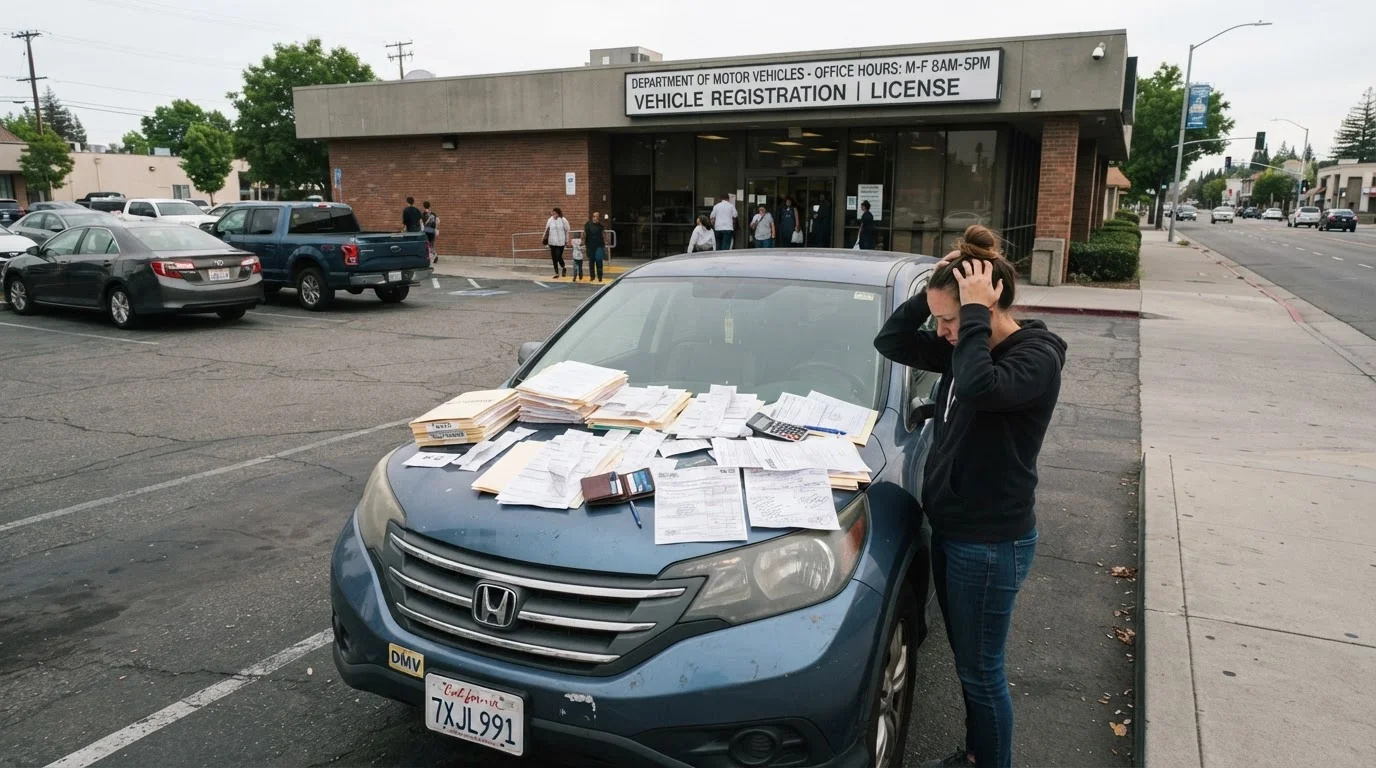
Every state requires vehicles to be registered, and most charge annual renewal fees that vary widely - from under $50 in some states to several hundred dollars in others, sometimes calculated as a percentage of the vehicle's value. New owners also face one-time titling fees when they first take ownership. These costs don't show up on a monthly car payment, so they tend to arrive as a lump-sum surprise. Check your state's DMV website to understand what you'll owe and when.
Registration renewal fees can range from under $50 to several hundred dollars depending on your state.
Emissions and Safety Inspections
Many states require periodic emissions testing and/or safety inspections - typically every one or two years. The inspection itself usually costs between $20 and $75, but the real expense arrives if your vehicle fails. Repairs needed to pass can range from a simple sensor fix to a catalytic converter replacement costing over $1,000. Keeping up with routine maintenance reduces the likelihood of a surprise failure, but new owners should budget for the possibility.
Failing an emissions test can lead to repair costs far exceeding the inspection fee itself.
Tire Replacement
Tires are consumables - they wear out, and replacement is inevitable. A set of four passenger tires commonly costs between $400 and $1,000 or more depending on size, type, and brand tier, plus mounting and balancing fees. Most tires last between 25,000 and 60,000 miles, but driving habits, road conditions, and alignment issues affect that significantly. Checking tread depth regularly and rotating tires on schedule (typically every 5,000-7,500 miles) extends their life. See our car maintenance hub for guidance on tire care basics.
A full set of replacement tires can cost $400-$1,000 or more - a cost many new owners don't anticipate.
Brake Service
Brake pads wear down with use and need periodic replacement - typically every 25,000 to 65,000 miles, depending on driving style and pad material. Replacing just pads is relatively affordable, but if rotors are worn or warped, the bill climbs considerably. Ignoring brake wear doesn't defer the cost - it increases it, as damaged rotors require replacement rather than resurfacing. Brake service is also a safety matter; driving on worn brakes is dangerous and should not be deferred.
Delaying brake service turns a manageable pad replacement into a far more expensive rotor job.
Insurance Gaps and Deductibles
New owners sometimes underestimate how insurance costs evolve. Premiums can increase after a claim, a moving violation, or even a change of address. Equally significant: many drivers choose higher deductibles to lower monthly premiums, then struggle to cover that deductible when a claim arises. Comprehensive and collision coverage, gap insurance on financed vehicles, and roadside assistance add-ons each carry separate costs that aren't always fully understood at sign-up. Reviewing your policy annually helps ensure coverage still matches your situation.
A high deductible lowers your premium but can leave you short on cash when you actually need to file a claim.
Routine Fluid and Filter Services
Beyond oil changes, vehicles require periodic attention to transmission fluid, coolant, brake fluid, power steering fluid, and cabin and engine air filters. These services don't all occur on the same schedule, and their costs vary by vehicle. Skipping them doesn't save money - it typically shortens component life and leads to larger repair bills down the road. Your owner's manual is the most reliable source for service intervals; manufacturer schedules have changed significantly over the years, and common oil change myths still lead many drivers to over- or under-service their vehicles.
Skipping fluid services rarely saves money - it typically accelerates wear and leads to larger repair bills.
Parking, Tolls, and Storage
For urban and suburban drivers, parking costs are a real and recurring expense - monthly garage fees in major cities can rival a car payment. Toll roads, toll bridges, and electronic toll collection accounts (with their associated fees) add up quietly over time. Drivers in cold climates may also face costs for winter tire swaps, covered storage, or battery maintenance during extended cold snaps. These costs are easy to dismiss as minor, but over a year they often represent a meaningful sum.
Parking and tolls are easy to overlook in a budget but can add hundreds of dollars to annual ownership costs.
Build These Into Your Budget Before You Need Them
None of the costs on this list are hidden in a deceptive sense - they're simply easy to overlook when attention is on the purchase itself. The drivers who manage vehicle ownership most effectively are those who treat it as an ongoing financial commitment, not a one-time transaction.
Create a Dedicated Vehicle Expense Fund
Consider setting aside a fixed monthly amount - separate from your loan payment and insurance premium - specifically for vehicle ownership costs. Even $50-$75 per month can cover most routine maintenance and soften the blow of larger unexpected expenses. Treat it like a non-negotiable line item in your monthly budget, not a discretionary fund.
A practical approach is to open a dedicated savings account for vehicle expenses and contribute a fixed amount each month - even a modest cushion can absorb most of the surprises listed here. For a complete view of what ownership actually costs over time, our guide on the true cost of owning a car beyond the sticker price lays out the full picture. And if you're new to maintaining a vehicle, car maintenance guidance for first-year owners can help you stay ahead of routine expenses.
The content on this site is provided for informational purposes only and should not be considered a substitute for professional advice. While we strive to provide accurate and up-to-date information, we make no guarantees regarding its completeness or accuracy. Always consult a qualified professional for advice specific to your circumstances before making any decisions.