

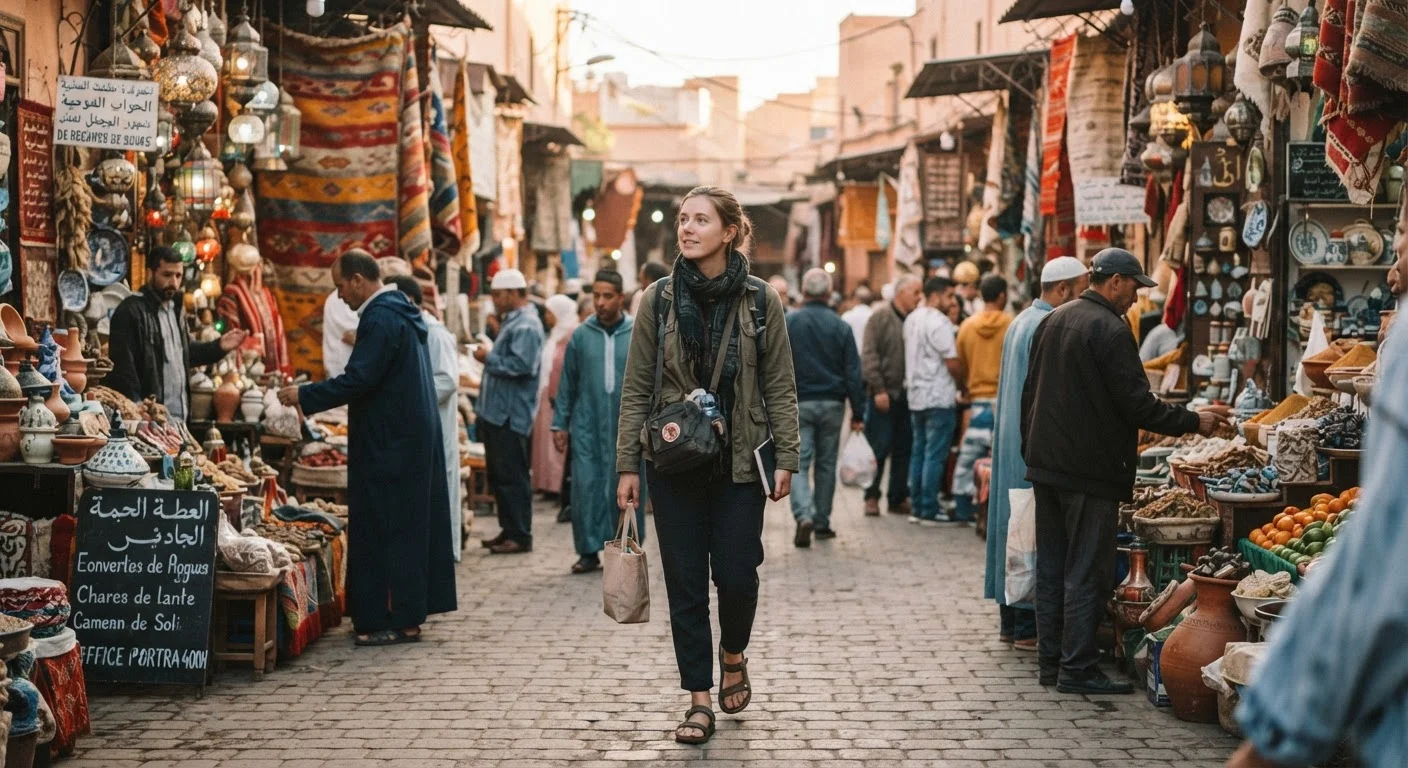
What Situational Awareness Actually Means
Situational awareness gets talked about in survivalist terms, but for everyday solo travelers it's much simpler: knowing roughly what's around you, who's nearby, and whether anything feels off. It's not hypervigilance. It's the difference between walking with your eyes on your phone and occasionally scanning the street ahead.
Most incidents solo travelers face - pickpocketing, scams, getting followed - are opportunistic. Bad actors look for distraction and vulnerability. Simply appearing calm, purposeful, and aware removes you from the easiest-target category. You don't need to be on guard every second; you need to check in regularly.
A good mental model: treat situational awareness like checking your mirrors while driving. You do it automatically, briefly, and without stopping to analyze everything you see. For more on building broader safety habits before you leave, see our pre-trip checklist.
Practical Habits That Actually Reduce Risk
The most effective safety practices for solo travelers aren't dramatic - they're repeatable routines that quietly reduce exposure over the course of a trip.
Share your itinerary with a trusted contact before every trip.
If something goes wrong, someone needs to know where you were supposed to be and when. This single step dramatically reduces the time it takes for help to reach you in an emergency. It costs nothing and takes five minutes.
Do a quick neighborhood read before wandering after dark.
Most cities have areas that shift in character at night. Knowing which streets are well-lit and populated - and which aren't - is information you can gather in minutes using maps, recent traveler forums, or your hotel's front desk.
Keep a small amount of accessible cash separate from your main wallet.
In the event of a pickpocket or a distraction-based theft, losing your entire wallet is far worse than losing a small decoy amount. Having emergency cash tucked in a different location means you can still get transport, food, or a phone charge while you sort out the loss.
Use official or app-based transportation rather than unmarked vehicles.
Unofficial taxis and unmarked rideshares are a common vector for overcharging, route manipulation, and in some regions, more serious safety incidents. Verified apps create an accountable transaction with driver ID and a digital record of your route.
Learn two or three key local phrases and emergency numbers before arrival.
Knowing how to say 'help,' 'police,' or 'I need a doctor' in the local language - and knowing the local emergency number - removes critical seconds of confusion in a crisis. This is a low-effort, high-return preparation step.
Digital Security on the Road
Physical awareness is only part of the picture. Your devices and accounts are equally vulnerable when you're traveling, especially on unfamiliar networks. Public Wi-Fi in hotels, cafes, and airports can expose login credentials and financial data if you're not taking basic precautions.
Use a VPN (virtual private network) - a tool that encrypts your internet connection - whenever you're on public Wi-Fi. Enable two-factor authentication on email and banking apps before you leave home. Keep your phone's screen lock active and set to engage quickly. Back up important documents to a secure cloud account so you're not stranded if a device is lost or stolen.
Be deliberate about what you share publicly on social media during a trip. Posting your real-time location or hotel name broadcasts your whereabouts to anyone following you. Save the photo dumps for when you're home. The Everyday American's guide to staying safe online covers the foundational digital habits worth having in place before any trip.
Location Sharing: A Practical Middle Ground
Sharing your live location with a trusted contact via your phone's built-in sharing feature is different from broadcasting your location publicly. Features like Apple's 'Share My Location' or Google Maps location sharing let one designated person see where you are without making that information public. This is a reasonable step for solo travelers, especially in unfamiliar regions. Turn it off when you're home.
Trusting Your Instincts Without Spiraling
Instinct isn't mystical - it's your brain processing subtle cues faster than your conscious mind can articulate them. When something feels wrong, that feeling is usually based on something real: a tone of voice, a person moving in a pattern that doesn't fit the environment, a situation that's escalating in a way you didn't invite.
The challenge for solo travelers is distinguishing genuine unease from general travel anxiety. A useful test: ask yourself whether a specific, observable thing changed that prompted the feeling, or whether you're just tired and in an unfamiliar place. If it's the former, take it seriously. Cross the street, step into a shop, leave the situation - you don't owe anyone an explanation.
Planning as a solo traveler involves a different mental load than group travel. The comparison between solo and group travel planning breaks down exactly what shifts when you're making every decision yourself. And if you're newer to international travel overall, the first-time international traveler overview provides a grounded start-to-finish framework.
~82%
Pickpockets target distracted victims
Security researchers and law enforcement consistently note that distraction - phones, maps, crowds - is the primary factor in opportunistic theft targeting tourists.
30 sec
Average time to clone an unsecured public Wi-Fi session
Cybersecurity professionals note that unsecured public networks can be intercepted in under a minute by someone using widely available tools - making VPN use especially important for travelers.
The content on this site is provided for informational purposes only and should not be considered a substitute for professional advice. While we strive to provide accurate and up-to-date information, we make no guarantees regarding its completeness or accuracy. Always consult a qualified professional for advice specific to your circumstances before making any decisions.