

Our Verdict
For most Americans taking their first trip to Southeast Asia, Thailand offers the most predictable and well-supported experience. Vietnam is the right call for travelers who want historical depth and regional variety. Indonesia makes the most sense when a specific destination - Bali, for instance - is the clear draw, rather than regional exploration. No single country is universally better; the right fit depends entirely on what kind of traveler you are.
| Best for | Recommended |
|---|---|
| First-time international travelers wanting ease and infrastructure | Thailand |
| Travelers drawn to history, food culture, and regional contrast | Vietnam |
| Travelers with a specific island destination in mind | Indonesia |
| Travelers with prior international experience wanting natural diversity | Indonesia |
Why These Three, and How to Think About the Choice
Thailand, Vietnam, and Indonesia consistently appear at the top of Southeast Asia itineraries for Americans - and for good reason. All three are accessible from major U.S. hubs (typically with one connection), offer established tourism infrastructure in key areas, and provide enormous variety within a single country. But they are not interchangeable experiences.
The real question isn't "which is best" - it's which fits your travel style, your available time, and your comfort with logistical complexity. If you're still building out your broader planning framework, the first-time international travel overview is a useful starting point before committing to a destination.
| Thailand | Vietnam | Indonesia | |
|---|---|---|---|
| Infrastructure for first-timers | Strong in major tourist areas | Moderate; varies by city and region | Strong in Bali; limited elsewhere |
| English accessibility | Widely available in tourist areas | Common in cities, sparse in rural areas | Good in Bali, limited on remote islands |
| In-country logistics | Straightforward in main corridors | Requires planning; long distances | Complex; island-hopping adds time |
| Cultural variety | Moderate; temples, cities, beaches | High; significant north-south contrast | Extreme; varies island by island |
| Budget range (daily) | Budget to mid-range widely available | Very affordable; mid-range growing | Varies widely by island and season |
| Best trip length | 7-14 days for a solid introduction | 10-21 days for north-to-south route | 7-14 days focused on one region |
| Visa complexity for Americans | Typically visa-free short stays | E-visa available; verify current rules | On-arrival option; verify current rules |
Thailand: The Most Accessible Entry Point
Thailand has invested heavily in its tourism infrastructure for decades. Major destinations like Bangkok, Chiang Mai, and the southern islands have English-language menus, ATMs that accept foreign cards, and well-worn backpacker and mid-range circuits. Getting from the airport to your hotel, booking a day tour, or navigating a night market is genuinely manageable for a traveler who has never left North America.
That ease comes with a tradeoff: popular areas can feel heavily touristed, and it takes deliberate planning to move beyond the most-visited corridors. Thailand also sits in a tropical climate zone - timing matters. The dry season generally runs November through April across most of the country, though regional variation is significant. Verify current entry requirements (including any visa rules) through official Thai government or U.S. State Department sources before booking.
Don't Skip the Timing Research
Southeast Asia's monsoon patterns don't follow a single calendar. Thailand's Gulf Coast, Andaman Coast, and northern regions all have different wet and dry seasons. Vietnam's north and south are often out of sync with each other. Checking regional weather patterns for the specific months you plan to travel - not just the country overall - can prevent arriving in the middle of a month-long rainy stretch.
Vietnam: Depth, Variety, and a Steeper Learning Curve
Vietnam stretches roughly 1,000 miles from north to south, and traveling its full length - Hanoi to Ho Chi Minh City, with stops in between - is genuinely like visiting multiple countries in one trip. The food changes dramatically by region, the landscapes shift from limestone karst to rice delta, and the historical sites span French colonial architecture, ancient imperial citadels, and war-era landmarks.
The tradeoff is logistics. Getting between cities efficiently usually means domestic flights or overnight trains, which require advance booking. Traffic in Hanoi and Ho Chi Minh City is intense and unlike anything most Americans have navigated. Vietnamese is tonal and difficult to approximate from English - though tourism-facing staff in cities often speak workable English. Budget travelers will find Vietnam extremely affordable; mid-range and luxury options have expanded significantly in recent years but vary by region.
Indonesia: Scale, Islands, and the Importance of Focusing
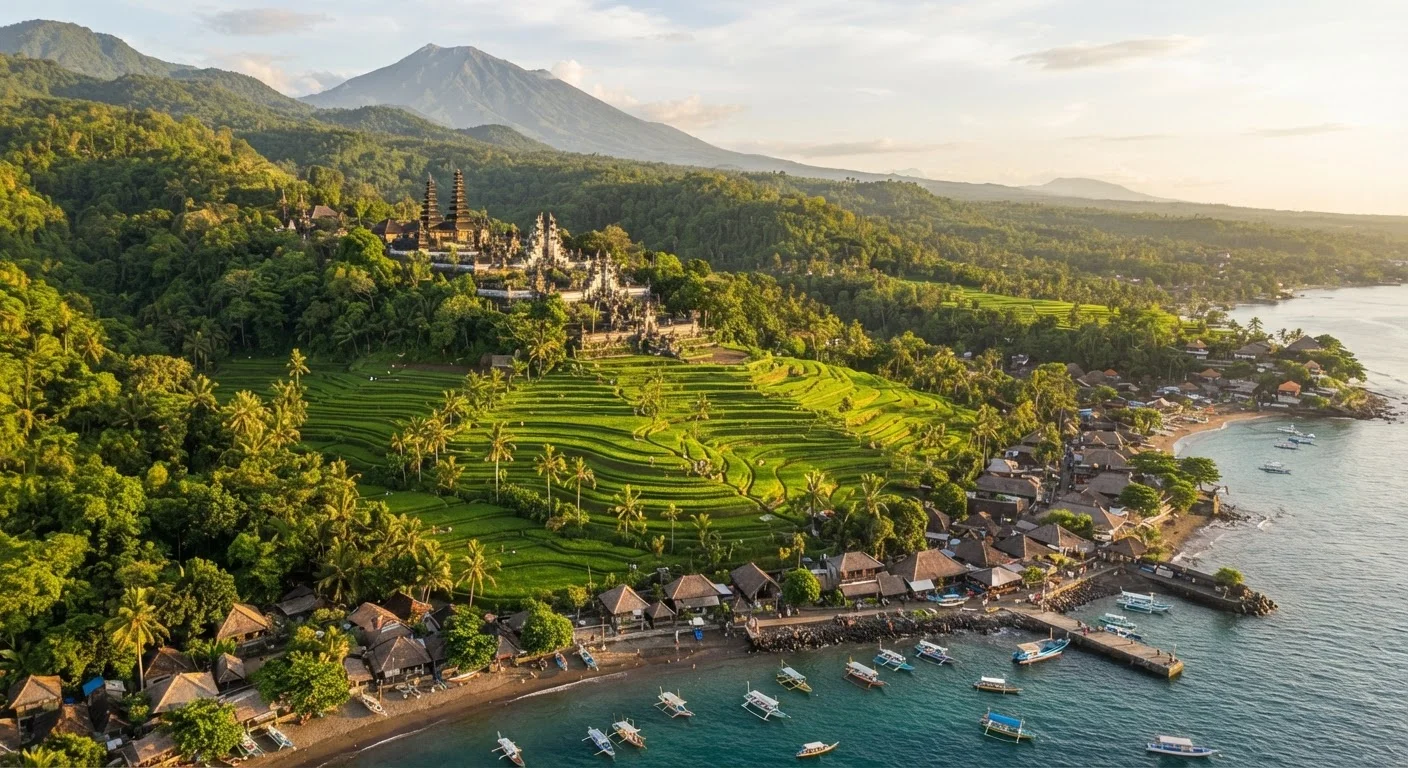
Indonesia is the world's largest archipelago nation - more than 17,000 islands, of which a few hundred are inhabited and a handful are on the traveler radar. Bali dominates first-trip conversations, and for good reason: it has its own international airport, a wide range of accommodations, rich Hindu cultural traditions distinct from the rest of the country, and enough variety (surf beaches, rice terraces, temples, arts villages) to fill a two-week trip without leaving the island.
The challenge is that "Indonesia" as a country is misleading as a trip concept. Lombok, the Gili Islands, Komodo, Raja Ampat - each requires planning a separate logistics chain. Domestic flights can be unreliable; ferry crossings vary in quality and safety standards. Travelers who want to island-hop should build in extra buffer days and verify transportation options through multiple sources. For a first trip, picking one or two geographic focal points is smarter than trying to cover the map.
For broader context on balancing ambition with practicality, see how to plan around a budget vs. a destination.
Practical Factors Every Traveler Should Check
Regardless of which country you choose, several logistics apply across the board and should be confirmed through official sources before you book flights:
- Visa requirements: Rules change. Americans can often enter Thailand visa-free for short stays, while Vietnam and Indonesia have their own distinct entry rules. Always verify current requirements at the U.S. State Department's travel portal or the destination country's official embassy site.
- Vaccinations and health advisories: Consult a travel medicine clinic or your primary care provider well before departure. Hepatitis A, typhoid, and updated routine vaccines are commonly recommended for Southeast Asia - your specific needs depend on your itinerary and health history.
- Travel insurance: Medical evacuation from remote areas in Southeast Asia is expensive. A policy that covers emergency evacuation and trip interruption is worth understanding before you go.
- Currency and payments: Cash is still king in many areas. ATM availability varies by region, and international transaction fees add up quickly without a fee-waiving card.
For a fuller planning structure that addresses these factors systematically, the smarter traveler's complete roadmap is worth reviewing before your first booking.
This article is for general informational purposes only. Travel requirements, health recommendations, and safety conditions change frequently. Always verify visa, entry, health, and safety information through official government and provider sources before making travel decisions.
The content on this site is provided for informational purposes only and should not be considered a substitute for professional advice. While we strive to provide accurate and up-to-date information, we make no guarantees regarding its completeness or accuracy. Always consult a qualified professional for advice specific to your circumstances before making any decisions.