

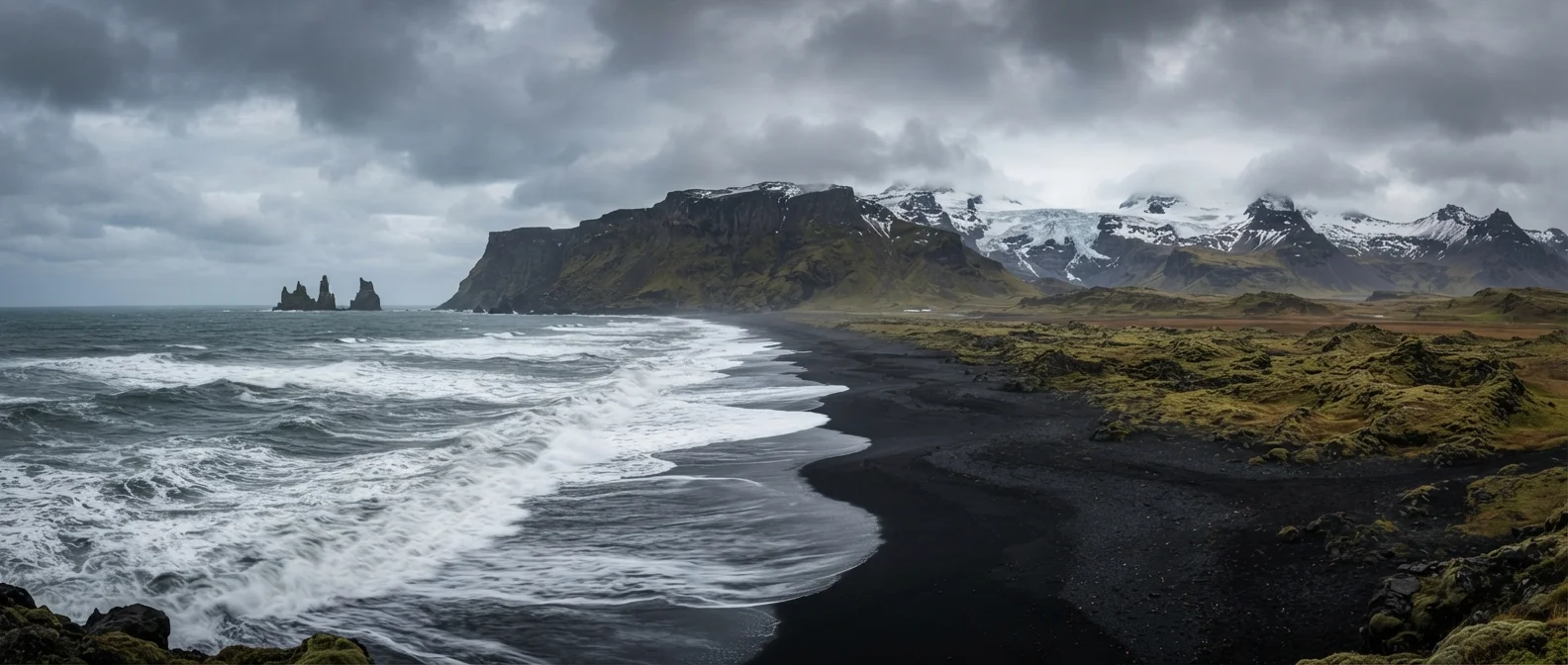
The Honest Truth About Iceland's Four Seasons
Iceland defies the neat travel-calendar logic that works for most destinations. Winter doesn't mean shuttered attractions; summer doesn't mean warm weather. What the country actually looks like when you land depends almost entirely on when you book - and those differences are dramatic enough to change what you can realistically do and see.
| Capital city | Reykjavik |
| Peak tourist season | June - August |
| Northern lights season | September - March (dark nights required) |
| Midnight sun period | Mid-May through late July |
| Highland (F-road) access | Typically late June - September only (Vegagerðin (Icelandic Road Administration)) |
| Average summer temp (Reykjavik) | 50-57°F (10-14°C) (Icelandic Met Office historical averages) |
| Average winter temp (Reykjavik) | 30-39°F (-1 to 4°C) (Icelandic Met Office historical averages) |
| Main road network | Route 1 (Ring Road) - open year-round |
Understanding how peak and off-season trade-offs work is especially useful here, because Iceland's seasonal logic is more extreme than most destinations Americans typically visit.
Winter (November - February): Darkness, Auroras, and Surprising Accessibility
Winter brings roughly four to five hours of daylight near the solstice, and temperatures in Reykjavik typically hover around 30-40°F. Snow is common but not guaranteed at sea level - the south coast often stays slushy rather than deeply buried. The interior highlands, however, are completely inaccessible; F-roads (unpaved mountain tracks) close for the season.
The main draw is the aurora borealis, or northern lights. Clear, dark skies away from city light are required, and there are no guarantees - cloud cover is frequent. The golden rule: plan at least four nights in Iceland if aurora-watching is your primary goal, to give yourself enough chances for a clear night.
The Ring Road (Route 1) remains open and drivable in winter, but four-wheel drive and snow tires are standard requirements. Daylight hours are too short for long scenic drives. Budget for shorter itineraries focused on waterfalls, geothermal pools, and ice cave tours, most of which are winter-only.
Aurora Borealis
A natural light display caused by charged solar particles interacting with Earth's atmosphere, visible in northern latitudes on clear, dark nights. In Iceland, viewing windows generally run from September through March.
Midnight Sun
A phenomenon in high-latitude regions where the sun remains above the horizon even at midnight during summer months. In Iceland, near-continuous daylight occurs from mid-May through late July.
F-Roads
Iceland's unpaved highland mountain tracks, designated with an 'F' prefix. These routes require 4WD vehicles and are officially closed outside the summer season, typically opening in late June and closing by September or October.
Golden Circle
A popular tourist route in southwest Iceland linking Þingvellir National Park, the Geysir geothermal area, and Gullfoss waterfall. It operates year-round but draws the heaviest crowds in summer.
Ring Road (Route 1)
Iceland's primary highway, which circles the entire country at roughly 828 miles in length. It remains paved and open year-round, though winter driving conditions can be challenging.
Shoulder Season
The travel periods between peak and off-peak seasons - in Iceland's case, roughly March-May and September-October. These windows typically offer fewer crowds and more moderate pricing, with some trade-offs in accessibility and service availability.
Summer (June - August): Midnight Sun and Maximum Access
Summer is when Iceland fully opens. Daylight is nearly continuous in June and July - the sun dips toward the horizon around midnight but doesn't fully set. This is disorienting for many first-time visitors; bring a sleep mask. Temperatures reach the low-to-mid 50s°F along the coasts, which feels cool to most Americans but is genuinely pleasant with the right layers.
The highlands open in late June, giving access to the Landmannalaugar geothermal area, the Laugavegur hiking trail, and the remote Westfjords interior. Puffins are visible on coastal cliffs from May through August. The Midnight Sun Festival and National Day (June 17) attract larger local crowds.
This is also peak tourist season. The Golden Circle and South Coast waterfall stops can feel crowded mid-morning. Going early (before 8 a.m.) or late evening (9-11 p.m.) takes advantage of the continuous light while dodging the tour bus timing.
Spring and Fall: The Underrated Windows
Spring (March - May) offers a real middle ground: aurora chances still exist in March and April before nights grow too bright, snow is retreating, and crowds are lighter than summer. Puffins return to coastal cliffs in May. Some highland roads begin opening in late May, though conditions vary year to year - always verify current road status through Vegagerðin, Iceland's road administration website, before driving F-roads.
Fall (September - October) brings the first auroras of the new dark season and the onset of autumn foliage across the birch-covered interior valleys - a surprisingly overlooked visual. September sees declining crowds and more reasonable accommodation availability compared to July and August.
Both shoulder seasons carry genuine unpredictability: weather systems shift fast, highland routes may be partially open or closed, and some smaller guesthouses and tour operators scale back operations. Verify directly with lodging and tour providers before building a tight itinerary around specific routes.
What Conditions to Actually Prepare For
Regardless of season, a few realities hold year-round. Wind is the most underestimated factor - gusts exceed 40 mph regularly, and exposed coastal areas can be genuinely hazardous. Waterproof outer layers are non-negotiable. Road conditions change within hours; the Icelandic Met Office (vedur.is) and safetravel.is are the authoritative sources American travelers should bookmark before any self-drive trip.
Entry requirements, including visa rules for American passport holders, should always be confirmed through official Icelandic government sources or your nearest Icelandic consulate before travel, as policies can change.
Iceland rewards travelers who arrive with calibrated expectations rather than highlight-reel assumptions. The country looks and feels genuinely different across its four seasons - not just aesthetically, but in terms of what's physically accessible. Matching your itinerary to the season you're actually arriving in is the single most useful planning step you can take.
The content on this site is provided for informational purposes only and should not be considered a substitute for professional advice. While we strive to provide accurate and up-to-date information, we make no guarantees regarding its completeness or accuracy. Always consult a qualified professional for advice specific to your circumstances before making any decisions.