

Why Holiday Sale Myths Persist - and What They Cost
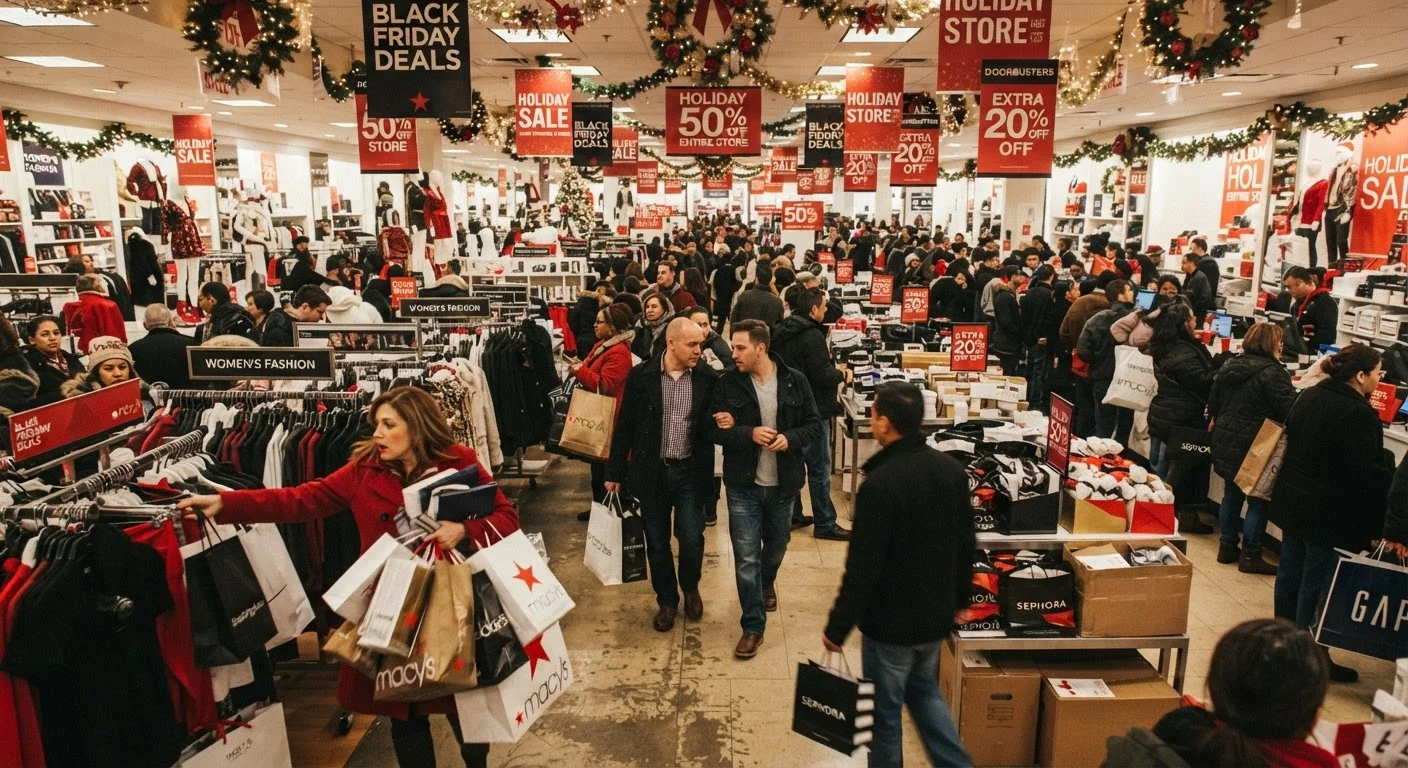
Holiday sales season generates more retail spending than any other period of the year, and with it comes a dense fog of conventional wisdom that doesn't always hold up. Shoppers repeat these beliefs because they seem logical, they're reinforced by marketing, and confirming them feels better than questioning the purchase. But acting on inaccurate assumptions about when and how to shop can result in paying more than necessary - or spending money that wasn't in the plan at all.
The myths below aren't abstract. Each one reflects a documented pattern in how retailers price and promote during the holiday window, and each one has a direct cost for shoppers who take it at face value.
Myth
Black Friday offers the lowest prices of the year on almost everything.
Fact
Black Friday features strong deals in select categories - particularly TVs and appliances - but many items are priced lower at other points during the year.
Consumer research has consistently shown that prices on many products - including toys, clothing, and small kitchen appliances - are comparable to or lower than Black Friday prices during other sale windows like mid-January clearance or mid-summer promotions. Retailers concentrate their most aggressive discounts on a narrow set of high-visibility items to generate traffic, while much of their inventory sees only modest markdowns. Treating Black Friday as a universal price floor leads shoppers to skip legitimate off-season deals.
Myth
The percentage off shown at checkout reflects savings from the item's normal selling price.
Fact
Retailers frequently raise the listed 'original' price weeks before a sale, making the discount appear larger than it is relative to what the item ordinarily costs.
This practice - sometimes called reference price inflation - is well-documented and has been subject to scrutiny by consumer protection regulators. A product listed as '40% off' during a sale weekend may have had its price quietly raised from $50 to $70 in the weeks prior, meaning the 'sale price' of $42 is barely below the real everyday price. Tools that track historical pricing can help shoppers verify whether a listed markdown represents a genuine reduction.
Myth
Cyber Monday always has better online deals than Black Friday.
Fact
Many Cyber Monday offers are identical to or carry over from Black Friday promotions, and some deals are actually less competitive by that point.
The distinction between Black Friday and Cyber Monday has blurred significantly as most major retailers moved their holiday promotions online. Studies of pricing data show that a large share of Cyber Monday deals are simply extensions of Black Friday pricing, and popular items may already be sold out or back-ordered by the time Cyber Monday arrives. Waiting assumes a better deal is coming - which isn't always the case.
Myth
Buying during a sale always saves money compared to waiting.
Fact
Artificial urgency during sale season can push shoppers into purchases they wouldn't otherwise make, often spending more overall - not less.
This is one of the costlier myths because it reframes spending as saving. If an item wasn't on your list before it appeared in a promotional email, purchasing it at 30% off still costs 100% more than not buying it at all. Holiday sale season is engineered to increase purchase volume, not just reward planned purchases. Shoppers who enter the season without a defined list frequently report post-holiday credit card balances that outpace any savings captured. See the Smart Budgeting hub for strategies that help separate planned spending from impulse decisions.
Myth
Post-holiday sales are only for leftover junk nobody wanted.
Fact
Post-holiday clearance is one of the most reliable windows for steep discounts on seasonal décor, gift sets, clothing, and even electronics.
Retailers need to clear holiday inventory quickly to make room for new merchandise, and that pressure produces genuine markdowns - often 50-75% - that aren't replicated during the pre-holiday rush. Gift sets, wrapping supplies, seasonal kitchenware, and winter apparel regularly hit their lowest prices of the year in late December through January. If the goal is saving money rather than having items in time for the holidays, the post-season window is frequently superior. This pattern is worth incorporating into any long-range purchase planning - a topic explored in depth in Building a Personal Shopping Calendar Around Annual Sale Cycles.
Myth
A bigger original price means the percentage-off deal is worth more.
Fact
Absolute savings matter, but so does whether you actually needed the item and whether the sale price is competitive with other available sources.
A $500 item marked down 40% sounds more impressive than a $30 item marked down 40%, but if the $500 item's 'sale price' is still above what competing retailers charge year-round, the discount is largely cosmetic. Comparison shopping across multiple channels - not just within one retailer's promotional period - remains the most reliable way to gauge whether a deal is real. This logic applies equally to other purchase categories; for a parallel look at how this plays out in travel booking, see Common Myths About Booking Travel Directly vs. Through a Third Party.
How to Shop the Holiday Season With Clear Eyes
The antidote to these myths isn't avoiding sales altogether - it's approaching them with a framework built on what you know rather than what a promotion tells you to feel. A few practical habits make the difference:
- Track prices before the season. Price history tools let you verify whether a 'sale' price is actually below the item's recent norm. Several browser extensions do this automatically.
- Make a list before you browse. Defining what you intend to buy - and at what price you'd consider it a genuine deal - before entering a sale environment dramatically reduces impulse spending.
- Compare across channels, not just across sale events. A Black Friday price at one retailer may be the everyday price at another. Don't let a promotional frame substitute for actual comparison shopping.
- Account for the full cost. Shipping fees, return restrictions, and limited warranty terms that sometimes accompany sale items can offset headline savings. Read the fine print.
~1 in 3
Shoppers who regret holiday purchases
Consumer surveys conducted after multiple holiday seasons have consistently found that roughly a third of shoppers report at least one post-holiday purchase they wish they hadn't made.
Up to 6 weeks
How early pre-sale price inflation can begin
Retail pricing analyses have documented reference price increases beginning as early as six weeks before major sale events, well before most shoppers start comparing prices.
If you're prone to going over budget during sale seasons specifically, the underlying issue is usually structural rather than behavioral. Budgeting Myths That Keep People From Starting addresses some of the most common reasons people resist building a spending plan - and why a budget actually expands financial flexibility rather than restricting it. Understanding what different types of promotions actually offer is equally useful; Flash Sales vs. Sitewide Sales breaks down how to read different promotional formats so you're not caught off guard by fine print.
The Real Savings Window Is Often After the Holidays
If you can wait, late December through January clearance events routinely produce steeper discounts than anything offered during the pre-holiday rush. Retailers are motivated by inventory pressure, not customer reward - and that pressure peaks after the gifting season ends. Building this window into your annual purchase plan is one of the highest-return timing strategies available to everyday shoppers.
The content on this site is provided for informational purposes only and should not be considered a substitute for professional advice. While we strive to provide accurate and up-to-date information, we make no guarantees regarding its completeness or accuracy. Always consult a qualified professional for advice specific to your circumstances before making any decisions.