

Why Lenders Care So Much About Your Score
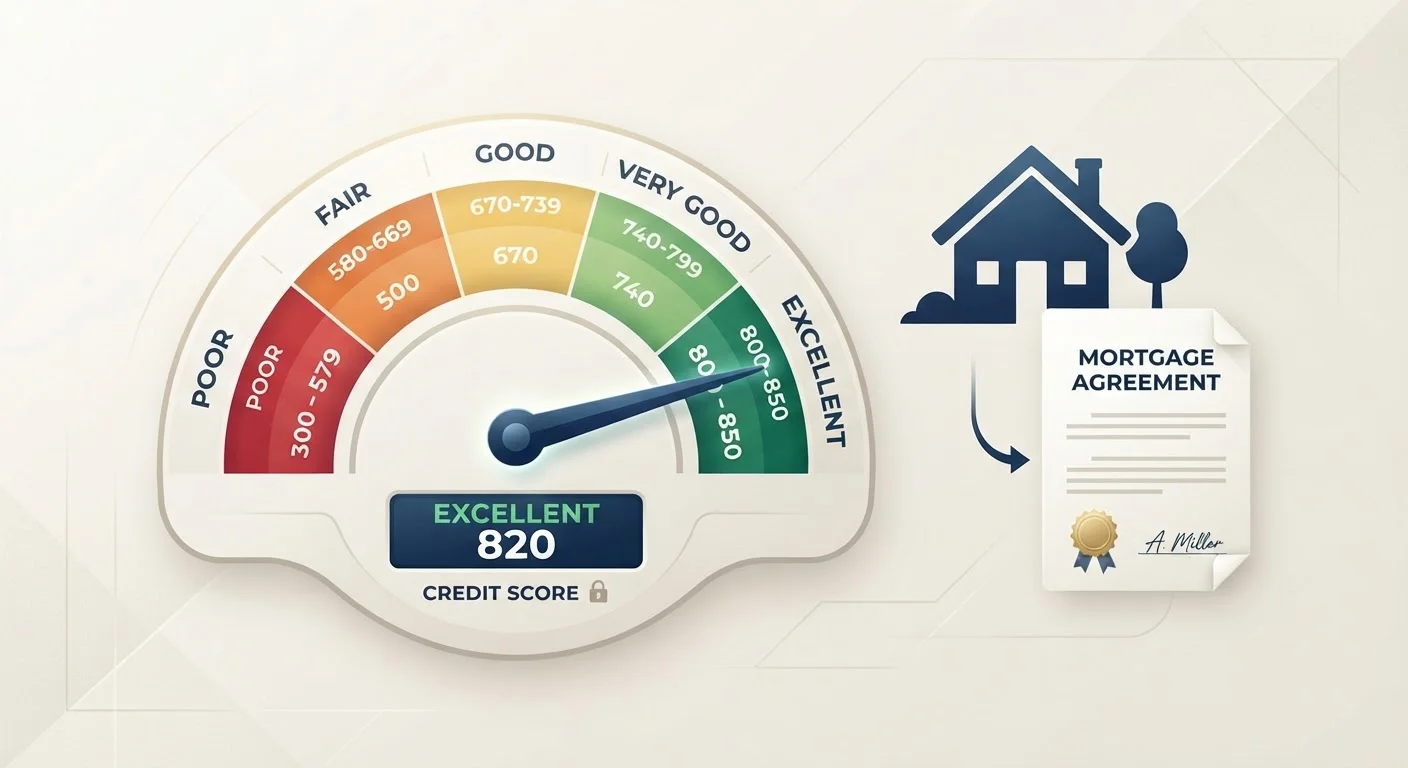
When you apply for a mortgage, a lender is agreeing to hand you a large sum of money - often hundreds of thousands of dollars - based on your promise to repay it over decades. Your credit score is one of the primary tools lenders use to assess the likelihood you'll keep that promise.
It reflects your history with debt: whether you pay on time, how much of your available credit you use, how long you've had accounts open, and whether you've had significant negatives like bankruptcies or collections. Lenders combine your score with other factors - income, assets, and debt levels - to decide whether to approve your loan and at what rate.
This is general educational information, not personalized financial advice. For guidance specific to your situation, consult a licensed mortgage professional or HUD-approved housing counselor.
Lender Overlays Add Another Layer
Government-backed loan programs like FHA set official minimum score requirements, but individual lenders can - and often do - set their own higher minimums, called "overlays." A lender might require a 620 score for FHA even though the program technically allows 580. Shopping multiple lenders matters not just for rate but also for eligibility. See what pre-approval tells you for more on how lenders evaluate your full application.
Score Ranges and What They Mean for Loan Access
Different loan programs have different score thresholds. Here's a general overview of how score ranges map to common mortgage options:
- 740 and above: Typically qualifies for the best available rates on conventional loans. Lenders see borrowers in this range as low-risk.
- 700-739: Strong range. Most conventional loan products are accessible, though rates may be slightly higher than the top tier.
- 660-699: Conventional loans are generally available, but you may pay more in interest or fees. FHA loans are also a viable path.
- 620-659: The lower boundary for many conventional lenders. FHA loans become more attractive here, often carrying competitive terms for this range.
- 580-619: FHA loans are the most common route, typically requiring a 3.5% down payment. Some conventional lenders may still consider applications with compensating factors.
- 500-579: FHA loans may still be an option, but lenders typically require a 10% down payment. Fewer lenders participate in this range.
- Below 500: Most loan programs are unavailable. Building credit history before applying is usually the necessary first step.
VA loans (for eligible veterans and service members) and USDA loans (for qualifying rural properties) don't have a government-set minimum score, but participating lenders commonly require 580-620 or higher. See the Mortgages & Financing hub for deeper explanations of each loan type.
620
Common minimum score for conventional loans
Most conventional mortgage lenders set 620 as a baseline, though individual lender overlays may vary.
0.5-1.5%
Typical rate spread across credit score tiers
Borrowers at the top credit tiers often receive interest rates significantly lower than those in mid-range tiers, per general mortgage industry data.
35%
Weight of payment history in FICO scoring
FICO publicly discloses that payment history is the largest single factor in its scoring model, making on-time payments the most impactful habit to maintain.
How Your Score Affects the Rate - Not Just Approval
Qualifying for a loan is only part of the picture. Your credit score also influences the interest rate you're offered, and that difference compounds significantly over time.
For illustration: on a $300,000 30-year fixed mortgage, a borrower with a 760 score might receive an offer with a notably lower rate than a borrower with a 660 score. Even a 0.5 percentage point difference in rate can translate to $25,000-$35,000 in additional interest paid over the life of the loan - a real financial consequence worth understanding before you apply.
This is one reason experienced borrowers compare multiple lender offers carefully, and why taking a few months to improve your score before applying can pay off materially.
Steps to Take Before You Apply
If you're not yet at the score range you're aiming for, there are concrete actions that can help. None of them are instant, but they're reliable:
- Pull your credit reports. Visit AnnualCreditReport.com - the federally authorized source - to access your reports from all three bureaus for free. Look for errors, accounts you don't recognize, or negative items you can address.
- Dispute inaccuracies. If you find incorrect information, you have the right to dispute it with the reporting bureau. Corrections can meaningfully lift your score once processed.
- Pay down revolving balances. Credit utilization - the percentage of your credit card limits you're using - is a major scoring factor. Reducing balances below 30% of your limits (ideally lower) can boost your score relatively quickly.
- Avoid opening new accounts. Each new application triggers a hard inquiry and temporarily reduces average account age. Hold off on new credit cards or auto loans in the months before applying.
- Pay everything on time. Payment history is the single largest component of most credit scores. Consistent on-time payments over several months reinforce positive trends.
Once you have a clear sense of your credit standing, your next step is understanding what a formal lender review looks like. See what a mortgage pre-approval actually tells you for context on that process, and review documents you'll need before applying to get ahead of lender requirements.
Time Your Application Strategically
If your score is close to a meaningful threshold - say, 615 heading toward 620, or 695 heading toward 700 - it may be worth a short delay to cross it. Ask a mortgage professional which score tier would apply to your target loan so you know exactly what you're working toward. A few months of focused effort on utilization and payment history can be enough to move the needle.
Frequently Asked Questions
It depends on the loan type. Conventional loans typically require a minimum score of 620, while FHA loans may allow scores as low as 500 with a larger down payment. VA and USDA loans don't set a hard minimum by law, but individual lenders usually require at least 580-620. The higher your score, the more options and better rates you're likely to see.
No. Checking your own credit is considered a "soft inquiry" and has no effect on your score. Only "hard inquiries" - when a lender pulls your credit as part of a formal application - can cause a minor, temporary dip. Multiple mortgage hard inquiries within a short window (typically 14-45 days) are usually counted as a single inquiry for scoring purposes.
It varies. Paying down high credit card balances can show results within one to two billing cycles. Correcting errors on your credit report may take 30-60 days after you dispute them. Building a positive payment history takes longer - consistent on-time payments over six to twelve months can produce meaningful improvement.
Rate shopping within a short period is treated favorably by credit scoring models. FICO generally groups multiple mortgage inquiries made within a 45-day window into one inquiry, so comparing lenders doesn't typically cause significant score damage. It's a smart practice encouraged by consumer financial guidance.
It's more difficult, but not impossible. Some lenders offer manual underwriting, which evaluates factors like rent payment history, utility bills, and employment rather than a traditional score. FHA loans allow manual underwriting in certain cases. Speaking with a HUD-approved housing counselor can help you explore your options.
The content on this site is provided for informational purposes only and should not be considered a substitute for professional advice. While we strive to provide accurate and up-to-date information, we make no guarantees regarding its completeness or accuracy. Always consult a qualified professional for advice specific to your circumstances before making any decisions.