

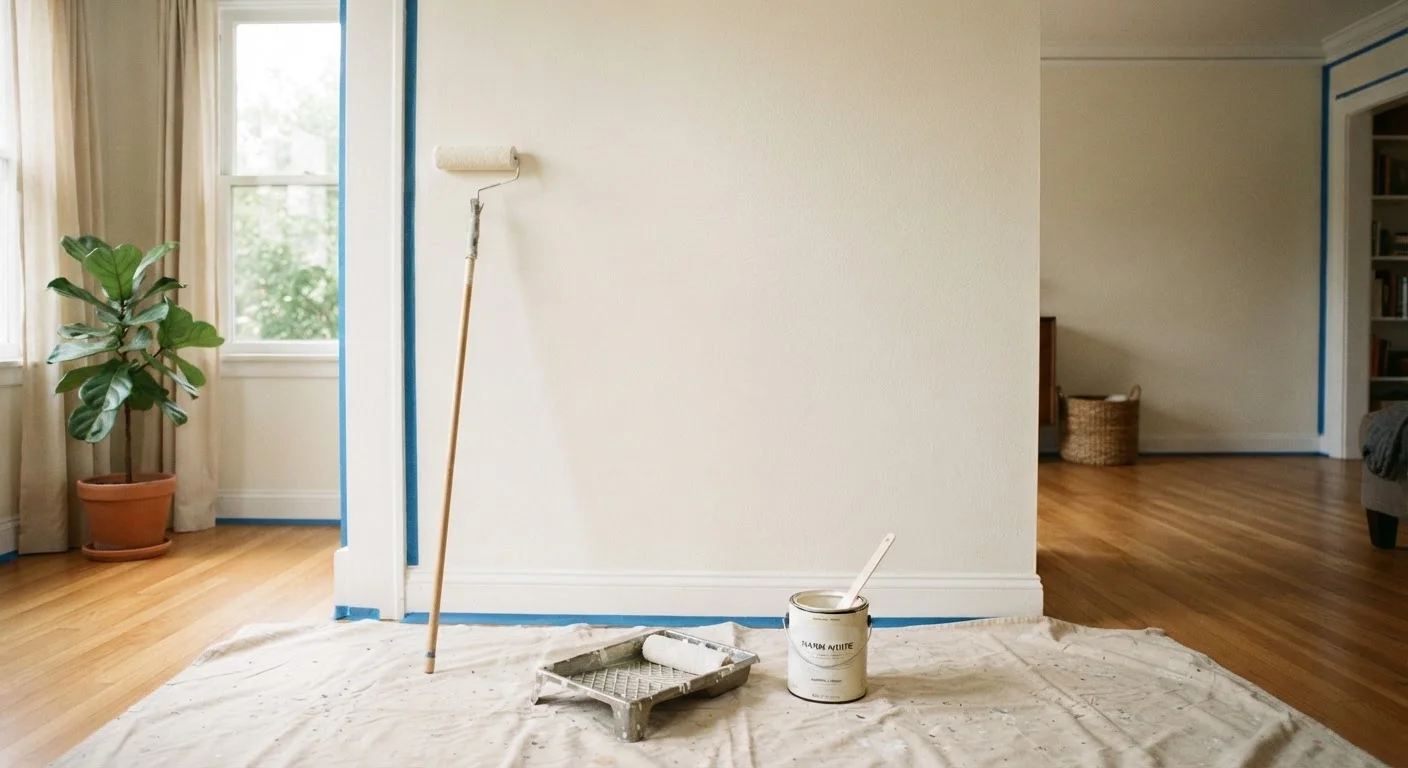
Why Painting Myths Persist
Interior painting sits in an interesting DIY middle ground: it looks straightforward enough that almost everyone attempts it, yet the results vary so widely that plenty of homeowners swear off doing it themselves ever again. The gap between those outcomes almost always traces back to misinformation rather than a genuine lack of skill. Myths about primer, paint coverage, tools, and color get passed along at hardware stores, in family advice, and across online forums - and they cost homeowners time, money, and frustration.
Clearing up these misconceptions doesn't require professional training. It mostly requires knowing which rules of thumb are solid and which ones have never been true. For a parallel look at how myths quietly shape decisions in other parts of home life, see our home organization myth-busting guide.
Myth
You always need primer before painting any wall.
Fact
Primer is essential in specific situations, but many modern paints are formulated to bond without a separate primer coat on already-painted, sound surfaces.
Primer earns its place when you are painting over bare drywall (the paper facing absorbs paint unevenly without it), covering a dramatically darker color, sealing water stains or smoke damage, or painting over a glossy surface. In those cases, skipping primer means more coats, uneven sheen, and possible adhesion failure. On a previously painted wall in reasonable condition, a good-quality paint applied with proper preparation can perform well without a separate primer. The key phrase is proper preparation - cleaning, patching, and light sanding - not the presence of primer alone.
Myth
One coat of quality paint is always enough.
Fact
Nearly every paint project requires at least two coats for even coverage and full color accuracy, regardless of paint quality.
Paint manufacturers who advertise "one-coat coverage" are describing ideal laboratory conditions - uniform surface, similar base color, controlled temperature. Real rooms have variations in texture, sheen, and existing color that one coat rarely hides completely. Two thin, properly dried coats will virtually always outperform one thick coat, which can sag, trap solvent, and dry unevenly. Budget for a second coat from the start; it is more efficient than buying an additional can mid-project.
Myth
Cheap brushes and rollers work just as well as expensive ones.
Fact
Applicator quality has a direct, measurable impact on finish smoothness, paint distribution, and how much time the job takes.
Inexpensive synthetic brushes often leave streaks, shed bristles, and hold less paint per stroke, meaning more dipping and more passes over the same area. Low-quality roller covers can leave texture inconsistencies or pick up and redistribute partially dried paint. A quality brush - typically a nylon/polyester blend for latex paints - and a roller cover with the right nap thickness for your wall texture genuinely reduces visible brush marks and speeds up the work. Applicators are reusable when cleaned properly, so the investment pays back across multiple projects.
Myth
Dark or bold colors will permanently stain or damage your walls.
Fact
Dark paint does not chemically harm walls and can be covered again with proper technique and the right primer when you want a change.
This myth likely comes from the experience of trying to paint over a dark color without primer and finding it incredibly difficult. The dark paint itself is not the problem - going back to a lighter shade over a dark base requires a tinted primer and extra coats, which takes more effort. The wall behind it is unaffected. Choosing a bold color is a fully reversible decision; it just takes more preparation to undo than a light color would.
Myth
You can skip painter's tape if you have a steady hand.
Fact
Even experienced painters use tape on critical edges; the time saved is almost always worth it, and freehand lines require far more cleanup.
A steady hand reduces visible mistakes, but paint capillary action - the way liquid paint wicks into tiny surface gaps - means even technically clean brushwork can bleed slightly at trim and ceiling lines. Painter's tape eliminates that variable and makes the work significantly faster overall because you can move with more confidence. Remove tape while the paint is still slightly tacky (not fully cured) at a low angle to avoid pulling dried paint with it.
Myth
Flat paint is the best choice for most interior walls because it hides imperfections.
Fact
Flat paint does disguise texture flaws, but its low durability makes it a poor choice for high-traffic areas and anywhere walls are regularly cleaned.
Flat (matte) finish paint absorbs light and minimizes the appearance of bumps and patches - genuinely useful in low-traffic rooms or on ceilings. However, it is also the least washable finish: scrubbing often removes the paint itself rather than the mark. Eggshell and satin finishes balance a slight sheen (which can highlight imperfections more than flat) with meaningful durability and cleanability, making them the practical choice for living rooms, hallways, and bedrooms. Reserve flat for ceilings and rooms that see little contact.
What Actually Makes a Paint Job Last
Once the myths are out of the way, the real drivers of a durable, professional-looking finish come into focus. Surface preparation is the most overlooked step: walls that are clean, dry, and lightly sanded where needed accept paint evenly and hold it far longer than walls painted directly over grime or gloss.
Don't Skip the Dry Time Between Coats
Applying a second coat before the first has fully dried is one of the most common causes of peeling, streaking, and wasted paint. Check the manufacturer's recoat window on your specific paint - conditions like high humidity or low temperatures can extend drying time significantly. Running fans or a dehumidifier in the room can help, but there is no reliable shortcut for patience here.
Thin, consistent coats applied with a quality roller in a systematic pattern - working in a "W" or "M" shape before filling in - distribute paint evenly and prevent lap marks. Allow each coat to dry fully according to the manufacturer's guidance before adding another; rushing this step is responsible for more peeling and blotchy results than almost any other error.
Lighting also matters more than most homeowners expect. Paint a small test patch and observe it under both natural daylight and your room's artificial lighting at different times of day before committing to a full room. Undertones shift dramatically between light sources, and catching a mismatch early saves significant rework.
2-3 coats
Typical coats needed for full color change
Paint industry guidance consistently recommends multiple thin coats over a single thick application for durability and even coverage.
80%
Of paint failures linked to poor surface prep
Professional painters widely attribute the majority of peeling, bubbling, and adhesion failures to inadequate cleaning and preparation before painting.
The content on this site is provided for informational purposes only and should not be considered a substitute for professional advice. While we strive to provide accurate and up-to-date information, we make no guarantees regarding its completeness or accuracy. Always consult a qualified professional for advice specific to your circumstances before making any decisions.