

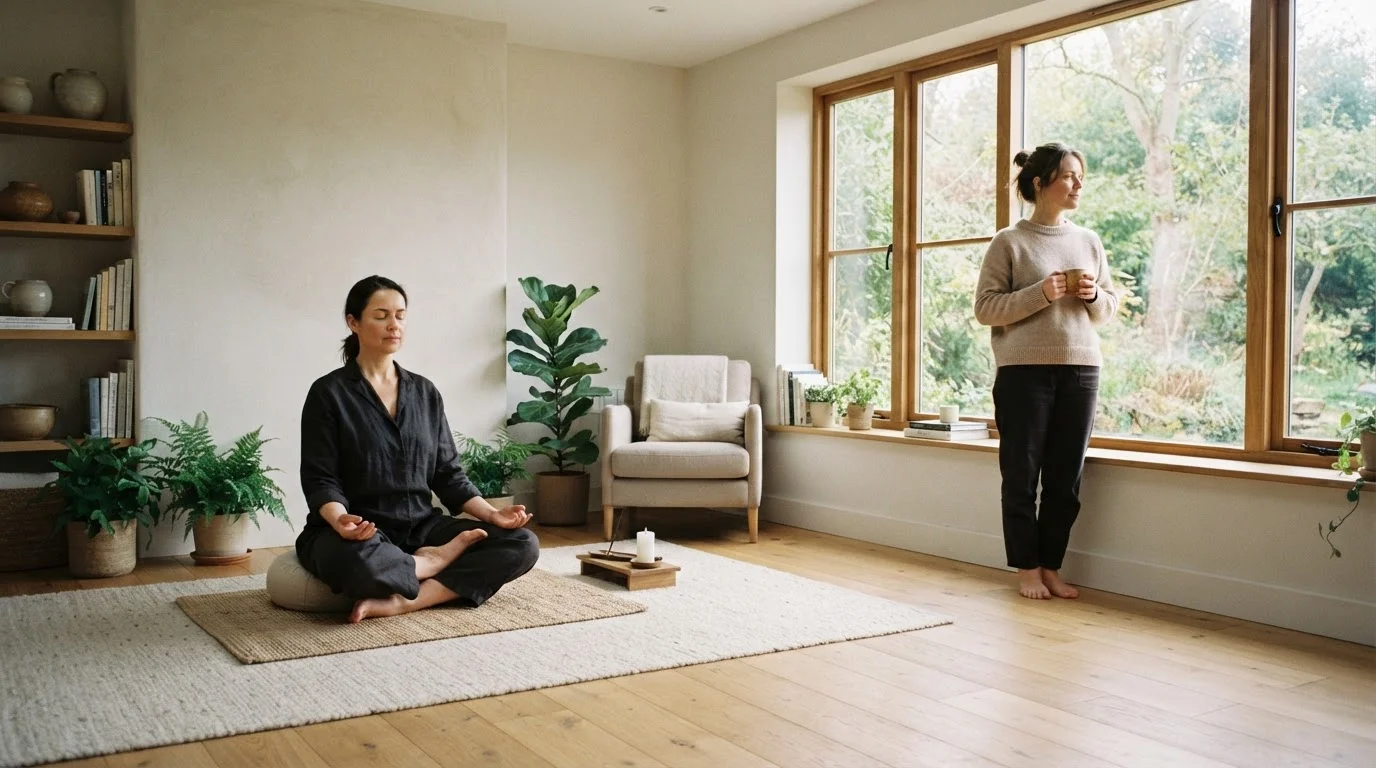
Option A
Mindfulness
The always-available state of present-moment awareness.
Best for: Anyone wanting to reduce stress and stay grounded during ordinary daily activities.
Option B
Meditation
The dedicated practice that trains your attention and awareness.
Best for: People seeking a structured, intentional technique to build deeper focus and mental resilience over time.
What Each Term Actually Means
The words mindfulness and meditation appear together so often that they can feel like synonyms. They are not - though they are deeply connected.
Mindfulness is a quality of attention: the practice of noticing what is happening right now - thoughts, sensations, emotions, your surroundings - without immediately judging or reacting to any of it. You do not need to sit still or close your eyes. You can be mindful while cooking dinner, listening to a colleague, or taking a shower.
Meditation, by contrast, is a formal practice - a deliberate activity you engage in at a specific time, typically seated and with reduced external distraction. Different meditation styles (breath-focused, body scan, loving-kindness, visualization) all share one common goal: training the mind to attend in a more intentional, stable way. Many styles of meditation are specifically designed to cultivate mindfulness, but meditation can also pursue other aims, such as relaxation, focus, or compassion.
A useful shorthand: mindfulness is something you are; meditation is something you do.
| Criterion | Mindfulness | Meditation |
|---|---|---|
| What it is | A quality of present-moment awareness | A formal, structured practice |
| When it happens | Anytime, during everyday activities | During dedicated, intentional sessions |
| Time required | Moments to minutes, integrated into daily life | Typically 10-45 minutes per session |
| Requires stillness? | No - can be practiced while moving | Usually yes - most styles use stillness |
| Learning curve | Low - anyone can begin immediately | Moderate - benefits from instruction or guidance |
| Research support | Strong for everyday stress reduction | Strong, especially for structured MBSR programs |
| Goal | Stay present and non-reactive | Train attention, awareness, and emotional regulation |
How They Overlap - and Where They Diverge
The relationship between the two is best understood as a circle within a circle. Meditation is one of the most reliable tools for developing mindful awareness, and most modern secular meditation programs - including the widely studied MBSR protocol developed at the University of Massachusetts - explicitly teach mindfulness as their core skill. Practicing meditation regularly tends to make everyday mindfulness feel more natural and less effortful.
Yet mindfulness is bigger than any single technique. Contemplative traditions, psychotherapy approaches, and even some workplace wellness programs draw on mindful awareness without prescribing formal seated meditation at all. If sitting still for twenty minutes feels daunting, starting with informal mindfulness - pausing to notice five slow, intentional breaths before a stressful meeting - is a completely legitimate entry point.
14%
U.S. adults who meditate regularly
According to a 2017 National Health Interview Survey by the CDC, the share of American adults reporting meditation practice had tripled from 2012 to 2017.
8 weeks
Typical MBSR program length
The standard Mindfulness-Based Stress Reduction program, developed at UMass Medical School, runs eight weeks and combines formal meditation with everyday mindfulness practices.
~30 min
Daily practice in key mindfulness studies
Many well-cited studies on mindfulness and stress reduction involve participants practicing roughly 30 minutes per day, though even shorter sessions show measurable effects.
The key divergence is intentionality and structure. Meditation carves out protected time and applies a specific method. Mindfulness asks only that you bring deliberate, non-judgmental attention to whatever you are already doing. Both require practice; neither is a passive state you simply fall into.
Practical Ways to Incorporate Both
You do not have to choose one over the other - in fact, most people benefit from layering them together. Here are some accessible starting points:
- Informal mindfulness: Pick one routine activity - your morning coffee, the commute, or a short walk - and commit to doing it with full attention each day. No app or timer needed.
- Formal meditation: Start small. Even five to ten minutes of focused breath awareness each day is enough to begin noticing changes in how you respond to stress. Many people find guided audio sessions helpful for building this habit.
- Mindful pauses: Use naturally occurring breaks - stopping at a red light, waiting for a page to load - as a cue to notice your breath and body for a few seconds. These micro-moments accumulate.
If you are navigating significant anxiety, depression, chronic pain, or other mental health concerns, speak with a qualified healthcare professional before choosing or changing any wellness practice. Programs like MBSR are often available through medical centers, therapists, and community organizations, and a clinician can help you determine whether a structured program is appropriate for your situation.
This article is for general informational and educational purposes only and is not a substitute for professional medical or mental health advice. Always consult a qualified healthcare provider for concerns about your personal health or wellbeing.
The content on this site is provided for informational purposes only and should not be considered a substitute for professional advice. While we strive to provide accurate and up-to-date information, we make no guarantees regarding its completeness or accuracy. Always consult a qualified professional for advice specific to your circumstances before making any decisions.