

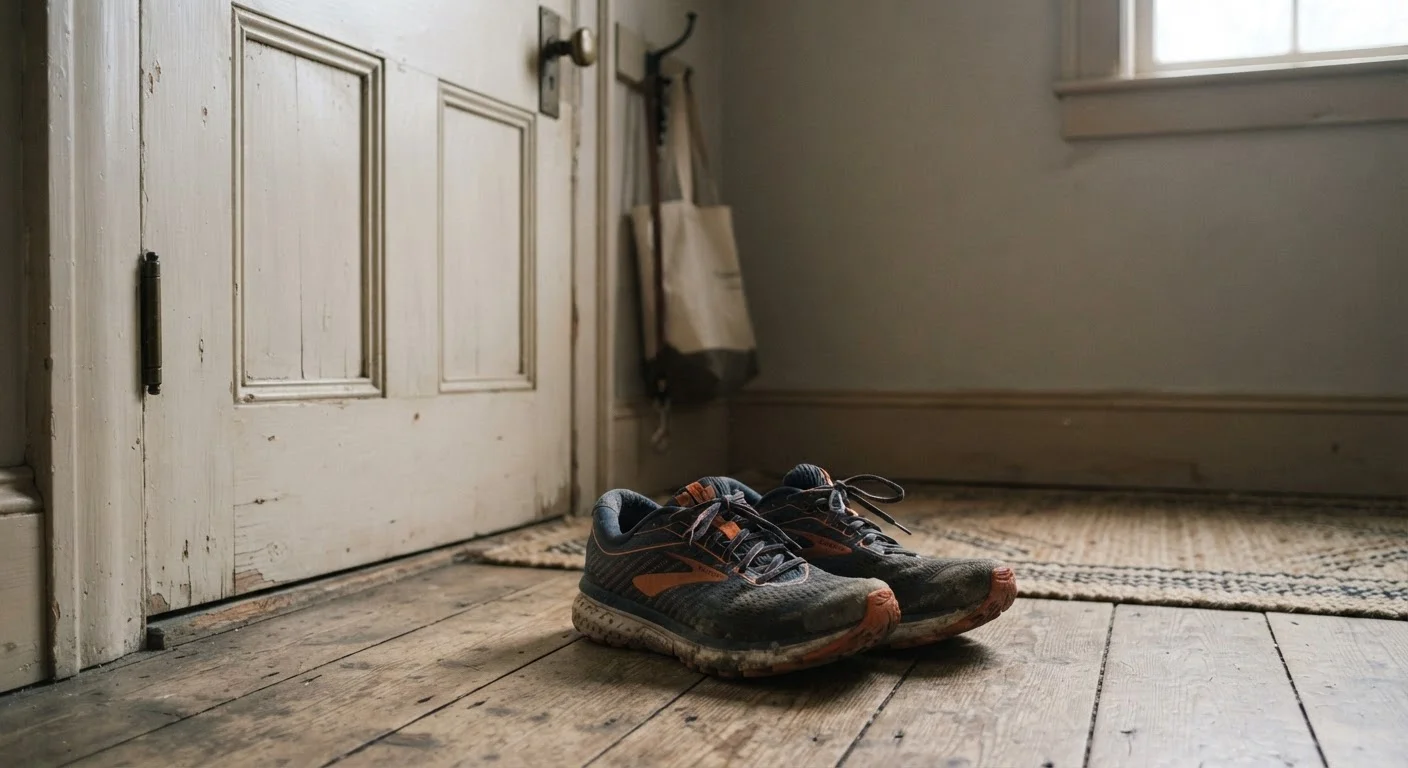
Quitting Isn't a Character Flaw
Most people who stop exercising tell themselves the same story: I just don't have the discipline. But research on exercise behavior consistently points elsewhere. The reasons people drop out tend to be structural - mismatches between how a routine was designed and what real daily life actually looks like.
Understanding what your specific reason for stopping reveals about your setup can make the difference between endlessly restarting and finally finding a pattern that holds. Here are the most common reasons adults give up - and what each one is really telling you.
For a broader look at how behavioral and structural factors combine to derail fitness programs early, see why so many fitness routines fail after six weeks.
"I don't have time"
This is the most cited reason - and the most misread one. When time is genuinely scarce, the problem usually isn't motivation; it's that the exercise format requires a large, unbroken block. A gym routine with commute, changing, and shower time can easily consume 90 minutes.
What it reveals: The format is too large for the life. Shorter, more frequent movement - even 10-15 minutes embedded into an existing routine - tends to be far more durable than sporadic long sessions. Building movement throughout the day, rather than concentrating it all into one slot, is one approach researchers and public health bodies increasingly highlight.
The format is too large for the life - not the motivation too small.
"It hurts too much afterward"
Delayed onset muscle soreness (DOMS) - the aching that peaks 24-48 hours after unfamiliar exercise - is normal. But when someone starts too hard, too fast, soreness stops being a sign of progress and starts being a deterrent.
What it reveals: The intensity ramp was too steep. A gradual progression over weeks, not days, gives the body time to adapt. Soreness that prevents normal daily movement is a signal to ease back, not push through.
Soreness that disrupts daily life is a sign the intensity ramp was too steep.
"I got bored"
Boredom is often framed as a personality issue - as if some people simply aren't cut out for exercise. In reality, boredom usually points to a routine that lacks variety, social connection, or any meaningful sense of progress.
What it reveals: The activity isn't intrinsically rewarding enough to sustain itself. Adding a social element (a class, a walking partner), varying the type of movement, or tying exercise to something enjoyable - a podcast, a scenic route - can shift the experience meaningfully.
Boredom usually points to a routine that lacks variety or social connection.
"I felt self-conscious at the gym"
The discomfort of exercising around others - especially in unfamiliar environments - is a real and underreported barrier. It's particularly common for people returning to exercise after a long break or those new to structured fitness.
What it reveals: The environment doesn't feel safe or welcoming. This doesn't mean the person needs to toughen up. It means the environment may need to change - whether that's working out at home, finding a smaller or more inclusive group, or starting with walking outdoors where the stakes feel lower.
When the environment doesn't feel safe, changing the environment beats forcing through it.
"I didn't see any results"
Expectations shaped by fitness advertising - rapid, dramatic transformations - often collide with the slower, subtler reality of how exercise actually changes the body. When visible results don't materialize within weeks, many people conclude the effort isn't worth it.
What it reveals: The goalposts were tied to appearance rather than function or feeling. Shifting attention to non-visual markers - improved sleep, steadier energy, reduced stress, better mobility - tends to produce more durable motivation, because these changes often emerge earlier and more reliably than physical appearance shifts.
Shifting focus from appearance to function often uncovers benefits that appear much sooner.
"Life got in the way and I never restarted"
An illness, a work crunch, travel, or a family emergency interrupts a streak - and then the streak never resumes. The interruption itself isn't the problem; the inability to re-enter is.
What it reveals: The routine had no built-in forgiveness. Sustainable exercise habits tend to have a clear, low-barrier re-entry point: a short default workout, a standing appointment, a minimum viable version of the routine. Without one, a pause becomes a stop.
A routine without a re-entry plan is one missed week away from quitting entirely.
Finding a Pattern That Lasts
What connects nearly every item on this list is that the obstacle is solvable - not through willpower, but through better design. Adjust the format, the timing, the environment, or the expectations, and exercise stops feeling like a battle.
Start Smaller Than You Think You Should
When restarting exercise after a break, the instinct is often to compensate with intensity. Most exercise scientists suggest the opposite: start at a level that feels almost too easy, and build gradually. A routine you stick to at low intensity beats a rigorous one you abandon after two weeks. Give yourself permission to begin with less.
If you're rebuilding a routine after a long break, starting with shorter, lower-intensity sessions is generally more sustainable than picking up where you left off. And if you have any underlying health conditions or haven't been active in a while, it's worth checking in with a qualified healthcare professional before significantly ramping things up.
For guidance on how much movement is actually needed to support long-term health, what the research says about exercise frequency, duration, and intensity offers a clear-eyed look at the evidence. And if you want a framework built for the long haul, explore fitness habits that hold up over decades.
This article is for general informational purposes only and is not a substitute for personalized medical or fitness advice. Always consult a qualified healthcare provider before beginning or significantly changing an exercise program.
The content on this site is provided for informational purposes only and should not be considered a substitute for professional advice. While we strive to provide accurate and up-to-date information, we make no guarantees regarding its completeness or accuracy. Always consult a qualified professional for advice specific to your circumstances before making any decisions.