

What Makes Exercise 'Low-Impact'?
The word impact in this context refers to the force your body absorbs when it makes contact with the ground or another surface during movement. When you run, for example, your foot strikes the ground repeatedly with a force that can be two to three times your body weight. Over time, that adds up - and for some people, it adds up uncomfortably.
Low-impact exercise is designed to reduce that load. The most common rule of thumb is that at least one foot (or another body part) maintains contact with a surface at all times, preventing the momentary free-fall that creates high impact. Cycling keeps you seated; swimming is buoyed by water; elliptical machines guide your feet in a smooth, continuous path.
What low-impact does not mean is easy. Intensity - how hard your heart and muscles are working - is a separate variable. A vigorous cycling class or a sustained swim at a challenging pace can be just as demanding cardiovascularly as a jog, while still being gentler on your knees and hips. Understanding this distinction matters because it frees people from thinking low-impact means settling for less. To explore how intensity is measured more precisely, see what exercise scientists mean by moderate intensity.
Common Low-Impact Activities
A wide range of everyday activities fall into the low-impact category. Some of the most commonly recommended include:
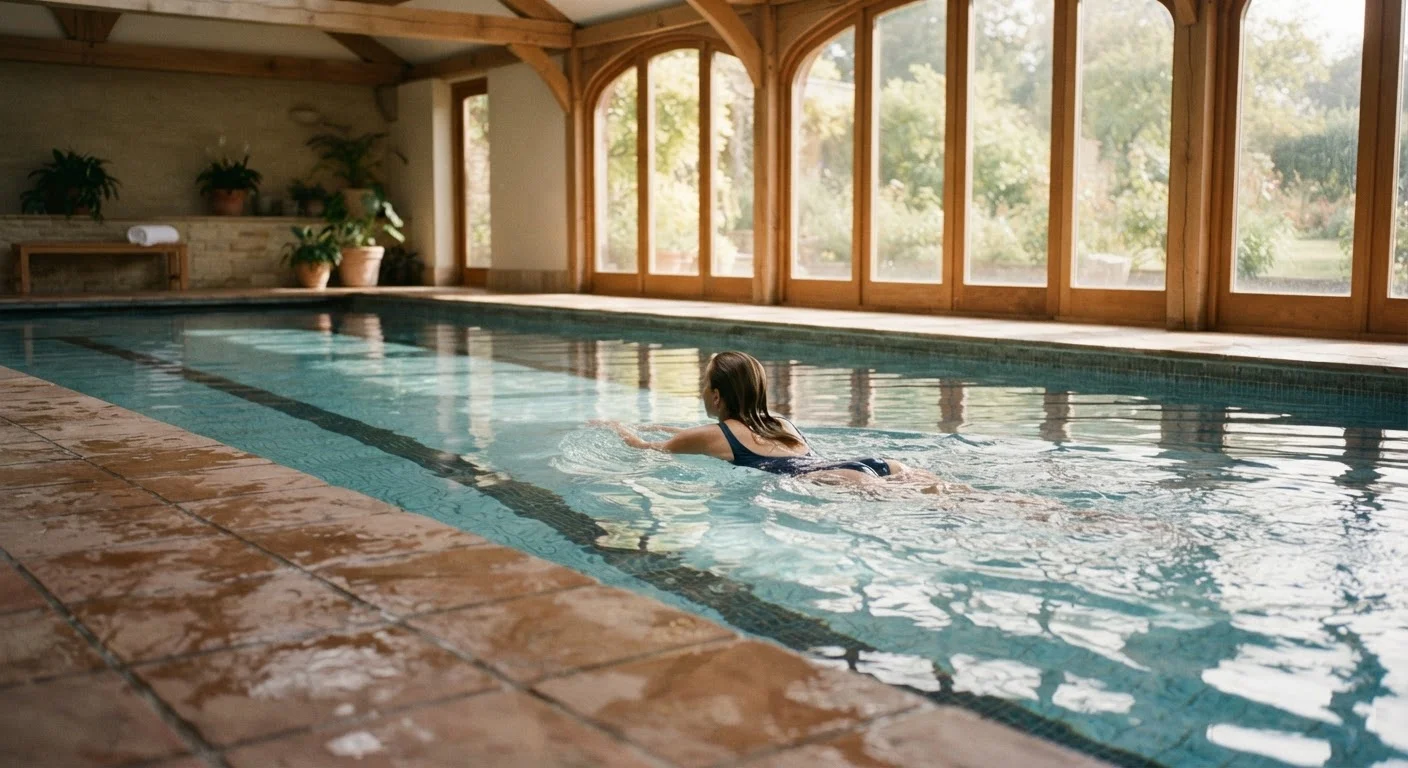
- Swimming and water aerobics: Water buoyancy supports a significant portion of body weight, dramatically reducing joint load while allowing full-body movement.
- Cycling (stationary or outdoor): The saddle bears most of your weight, and the pedaling motion is circular rather than percussive.
- Elliptical training: Mimics the motion of running but keeps feet on the pedals throughout, eliminating impact entirely.
- Walking: One of the most accessible options. Walking offers genuine cardiovascular benefits, though its limits are worth understanding too.
- Yoga and tai chi: Prioritize controlled movement, balance, and flexibility with minimal joint stress.
- Rowing (machine or on water): Largely non-weight-bearing and excellent for cardiovascular and upper-body conditioning.
- Resistance training with machines: Weight machines guide movement along fixed paths, often reducing destabilizing forces compared to free weights on compromised joints.
2-3×
Body weight force per running step
Biomechanics research consistently shows running generates ground reaction forces two to three times a person's body weight per foot strike, compared to far lower forces in walking or cycling.
~54M
U.S. adults with doctor-diagnosed arthritis
According to the CDC, roughly 54 million American adults have been diagnosed with some form of arthritis, making low-impact activity options particularly relevant for a large share of the population.
150 min
Weekly moderate aerobic activity recommended
U.S. physical activity guidelines from the Department of Health and Human Services recommend at least 150 minutes of moderate-intensity aerobic activity per week - a goal achievable through low-impact exercise.
These activities can typically be modified to suit different fitness levels, making them versatile options across a wide range of situations.
Who Benefits Most From Low-Impact Movement?
Almost everyone can benefit from incorporating low-impact exercise into their routine, but certain groups have the most to gain:
People Managing Joint Conditions
Individuals with osteoarthritis, rheumatoid arthritis, or other joint conditions often find that high-impact activity aggravates pain and inflammation. Low-impact movement keeps joints mobile and strengthens surrounding muscles - both of which can help manage symptoms - without adding to the stress. If you have a joint condition, speaking with a physical therapist or physician before starting any new exercise program is strongly recommended.
Older Adults
As we age, cartilage naturally thins and recovery from physical stress takes longer. Low-impact exercise allows older adults to maintain cardiovascular fitness, muscle strength, and balance with a lower injury risk. Regular movement also supports bone health when combined with some weight-bearing activity.
People Recovering From Injury
During rehabilitation, maintaining fitness without stressing the injured area is often a clinical priority. Swimming or cycling frequently appears in recovery protocols for this reason. Always follow guidance from a qualified healthcare provider during injury recovery.
Beginners and Those Returning After a Break
Starting with low-impact activities allows the body - muscles, connective tissue, and cardiovascular system - to adapt progressively. This reduces the risk of the overuse injuries that can sideline newcomers early. Research on exercise frequency and duration can help beginners set realistic and sustainable starting points.
Start Where You Are, Not Where You Think You Should Be
If you're new to exercise or returning after time away, resist the urge to start at a level that feels impressive but leaves you sore or discouraged. Beginning with shorter, lower-intensity low-impact sessions and building up gradually is a proven way to make movement a lasting habit. Small, consistent steps add up significantly over weeks and months.
Building a Sustainable Low-Impact Routine
Consistency matters far more than intensity for long-term health. A routine you can maintain week after week - even if individually modest - tends to outperform ambitious plans that lead to burnout or injury. Low-impact exercise supports consistency precisely because it's kinder to the body over repeated sessions.
A well-rounded approach typically blends aerobic low-impact activity (like swimming or cycling several times a week) with some resistance or strength work to protect bone density and functional strength. Incorporating movement throughout the day - not just during formal workouts - also matters. Research suggests that long periods of sitting can offset the benefits of structured workouts, so frequent lighter movement adds up.
It's also worth noting that exercise has a meaningful relationship with emotional wellbeing. Regular movement is among the habits most consistently linked to emotional resilience.
This article is for general informational and educational purposes only and is not a substitute for professional medical advice. Always consult a qualified healthcare provider before beginning a new exercise program, especially if you have an existing health condition, injury, or concern.
Frequently Asked Questions
Yes, low-impact exercise can support weight management when done consistently and at sufficient intensity or duration. Activities like cycling, swimming, and brisk walking all burn meaningful calories. They're also easier to sustain regularly because they cause less soreness and joint wear.
Some low-impact activities, such as resistance training with machines or water-based exercise, can build and maintain muscle. Activities like cycling primarily build lower-body endurance and strength. For broader muscle development, pairing low-impact cardio with resistance training is usually most effective.
Yes, walking is widely classified as low-impact because one foot is always on the ground, reducing joint loading compared to running. It's one of the most accessible and well-studied forms of low-impact movement. See our <a href="/health-wellness/fitness-movement/walking-as-exercise-what-it-can-and-cannot-do-for-your-health">full look at what walking can and cannot do</a> for a balanced assessment.
For many people with arthritis, low-impact exercise is strongly encouraged by health professionals because it maintains joint mobility and surrounding muscle strength without excessive strain. Water-based exercise in particular reduces load on inflamed joints. Always consult your doctor or physical therapist before starting or changing an exercise routine if you have a joint condition.
These terms are often confused but describe different things. Low-impact refers to reduced joint stress regardless of effort level. Low-intensity refers to a lower cardiovascular or muscular demand. A vigorous cycling session is low-impact but high-intensity; a slow walk is both low-impact and low-intensity.
Absolutely. Low-impact activities are an excellent starting point for people new to exercise because they allow the body to adapt gradually without overwhelming the joints or muscles. Building a consistent habit with lower-impact movement often makes it easier to progress safely over time.
The content on this site is provided for informational purposes only and should not be considered a substitute for professional advice. While we strive to provide accurate and up-to-date information, we make no guarantees regarding its completeness or accuracy. Always consult a qualified professional for advice specific to your circumstances before making any decisions.