

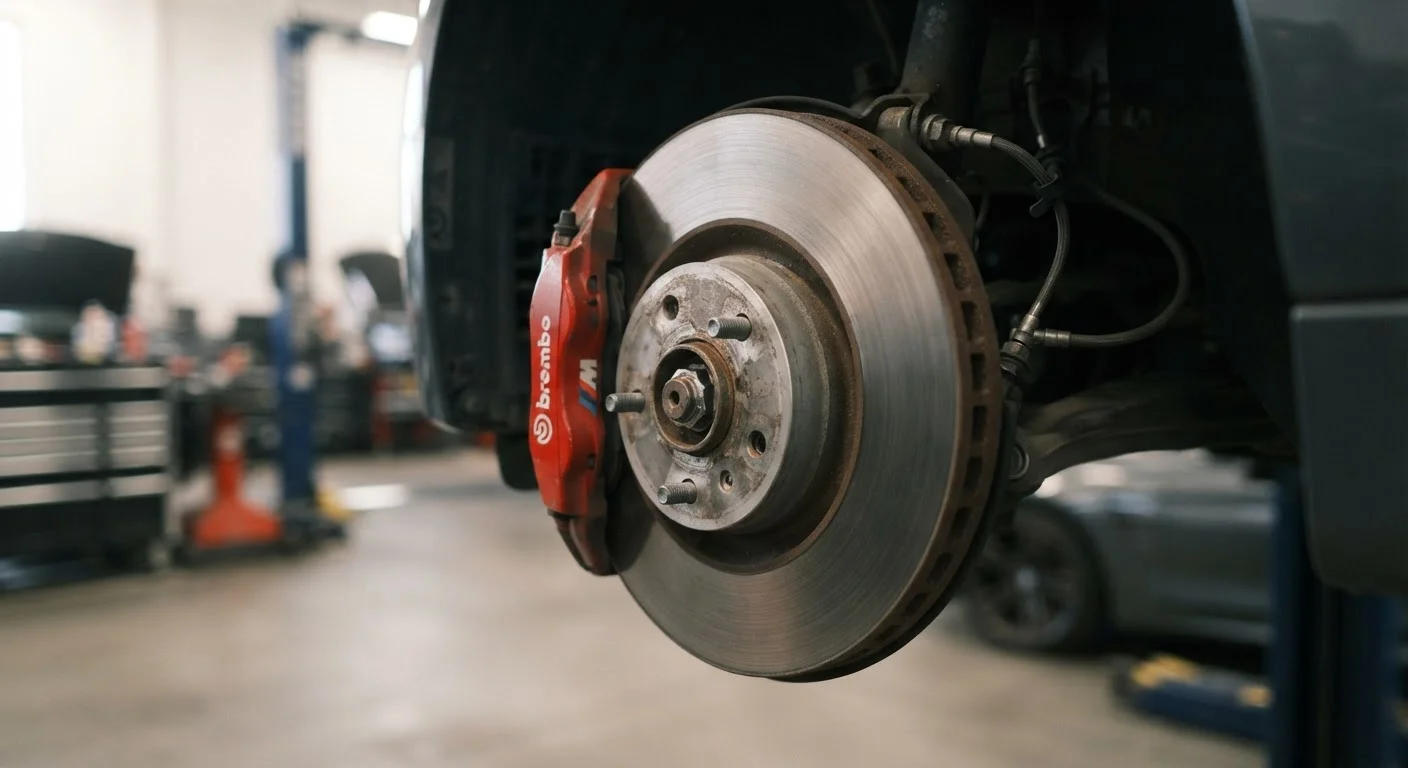
The Most Common Causes of Brake Squeaking
Brake noise falls into a few clear categories, and knowing which type you are dealing with narrows down whether you need a mechanic or just a few miles of normal driving.
Surface Rust and Morning Moisture
Steel rotors rust quickly when exposed to overnight dew, rain, or high humidity. When you first drive the next morning, the brake pads scrub that thin rust film away - producing a brief squeal that disappears within one or two stops. This is the most common and least concerning cause of brake noise.
Worn Brake Pad Wear Indicators
Most modern brake pads include a small metal tab called a wear indicator. When pad material wears down to a low level, this tab contacts the rotor and creates a deliberate, continuous high-pitched squeal. That sound is engineered to be your warning that pad replacement is needed soon.
Brake Pad Vibration
Sometimes pads vibrate slightly against the caliper or rotor during braking, producing a squeal even when pad thickness is adequate. This can result from glazed pad surfaces, improper installation, or missing anti-squeal shims. A mechanic can diagnose and correct this relatively straightforwardly.
Semi-Metallic Pad Composition
Semi-metallic brake pads - which are very common and perform well in many conditions - contain a higher proportion of metal particles than ceramic pads. That composition makes them more prone to noise, especially in cold weather or when the brakes have not yet warmed up.
Listen for Pattern, Not Just Noise
Pay attention to when the squeak occurs - only on the first stop of the day, during every braking event, or only when braking lightly versus firmly. Noting this pattern before your mechanic appointment gives them useful diagnostic information and can speed up the inspection.
Sounds That Signal a More Serious Problem
Not every brake noise carries the same urgency. Learning to distinguish a squeal from a grind is one of the most useful things a driver can know.
Persistent Squealing Throughout Every Stop
If the squeak does not go away after your first few morning stops and continues every time you brake, the wear indicator is the most likely explanation. This is not an emergency in itself, but it is a firm prompt to schedule a brake inspection within the next few weeks.
Grinding or Growling Sounds
A deep grinding or metal-on-metal growling noise is a more serious sign. It typically means brake pad material has worn away entirely, leaving the metal backing plate in direct contact with the rotor. This dramatically reduces stopping effectiveness and will damage the rotor surface quickly. If you hear this sound, have the vehicle inspected by a qualified mechanic as soon as possible - do not delay.
Squeaking Combined With Pulling or a Soft Pedal
If brake noise is accompanied by the vehicle pulling to one side during braking, a spongy brake pedal, or a burning smell, those are additional warning signs that go beyond simple pad wear. These symptoms warrant prompt professional attention.
When in Doubt, Get an Inspection
Brake systems vary significantly by vehicle make, model, and age. A noise that is harmless on one vehicle could indicate a different issue on another. If you are uncertain about what you are hearing, a brake inspection from a qualified mechanic is the safest path - most shops offer them quickly and without a lengthy diagnostic fee.
What to Do When Your Brakes Squeak
The appropriate response depends on the pattern and type of noise you are hearing.
- Morning squeak that clears up quickly: Monitor it over a few days. If it consistently disappears after your first stop, surface rust is almost certainly the cause. No action is needed beyond routine brake checks at your next service interval.
- Persistent squeal on every stop: Schedule a brake inspection. A mechanic will measure pad thickness, check rotor condition, and assess the caliper hardware. Catching worn pads before they reach bare metal keeps repair costs lower.
- Grinding sounds: Treat this as urgent. Continuing to drive risks rotor damage, higher repair bills, and - more importantly - compromised braking ability.
- New pads squeaking after installation: Give them time to bed in. If the noise persists past a few hundred miles, return to the shop for a follow-up check.
As a general rule, brake inspections are recommended at least once a year, or whenever you have your tires rotated. Most shops will inspect brakes as part of a routine service at no additional charge, giving you a clear picture of pad and rotor condition before noise ever starts.
~2-3mm
Minimum safe brake pad thickness
Most brake manufacturers and automotive engineers consider pad replacement necessary at or before this thickness to maintain safe stopping distances.
~70%
Of brake noise caused by non-urgent factors
Automotive service data consistently shows the majority of brake squeak complaints are traced to surface rust, pad vibration, or break-in wear rather than critically worn components.
Frequently Asked Questions
Short-term, a brief morning squeak is generally not dangerous. However, if the noise is persistent or occurs every time you brake, you should have your brakes inspected promptly. Continuing to drive on severely worn pads risks rotor damage and significantly reduced stopping ability.
Overnight moisture causes a thin layer of surface rust to form on brake rotors. When you first apply the brakes, the pads scrub this rust off, producing a brief squeal. This usually clears up within the first few stops and is not a cause for concern.
This depends on the cause. If it is the wear indicator squealing, pad replacement is overdue - most mechanics recommend acting within a few weeks at most. Ignoring it risks scoring the rotor, which is a costlier repair.
New pads sometimes squeak during a break-in period as the pad surface seats against the rotor. This typically resolves within several hundred miles. If it does not, the pads may need a thin application of brake lubricant on the caliper contact points - a job best left to a mechanic.
Yes. Semi-metallic pads tend to squeak more than ceramic pads, especially in cold or wet conditions, because of their higher metal content. Ceramic pads are generally quieter, though trade-offs in performance and cost exist between pad types.
Squealing is typically a high-pitched tone caused by vibration or the wear indicator. Grinding is a lower, harsher sound indicating metal-on-metal contact - meaning pad material is likely gone entirely. Grinding requires immediate attention and should not be driven on without inspection.
The content on this site is provided for informational purposes only and should not be considered a substitute for professional advice. While we strive to provide accurate and up-to-date information, we make no guarantees regarding its completeness or accuracy. Always consult a qualified professional for advice specific to your circumstances before making any decisions.