

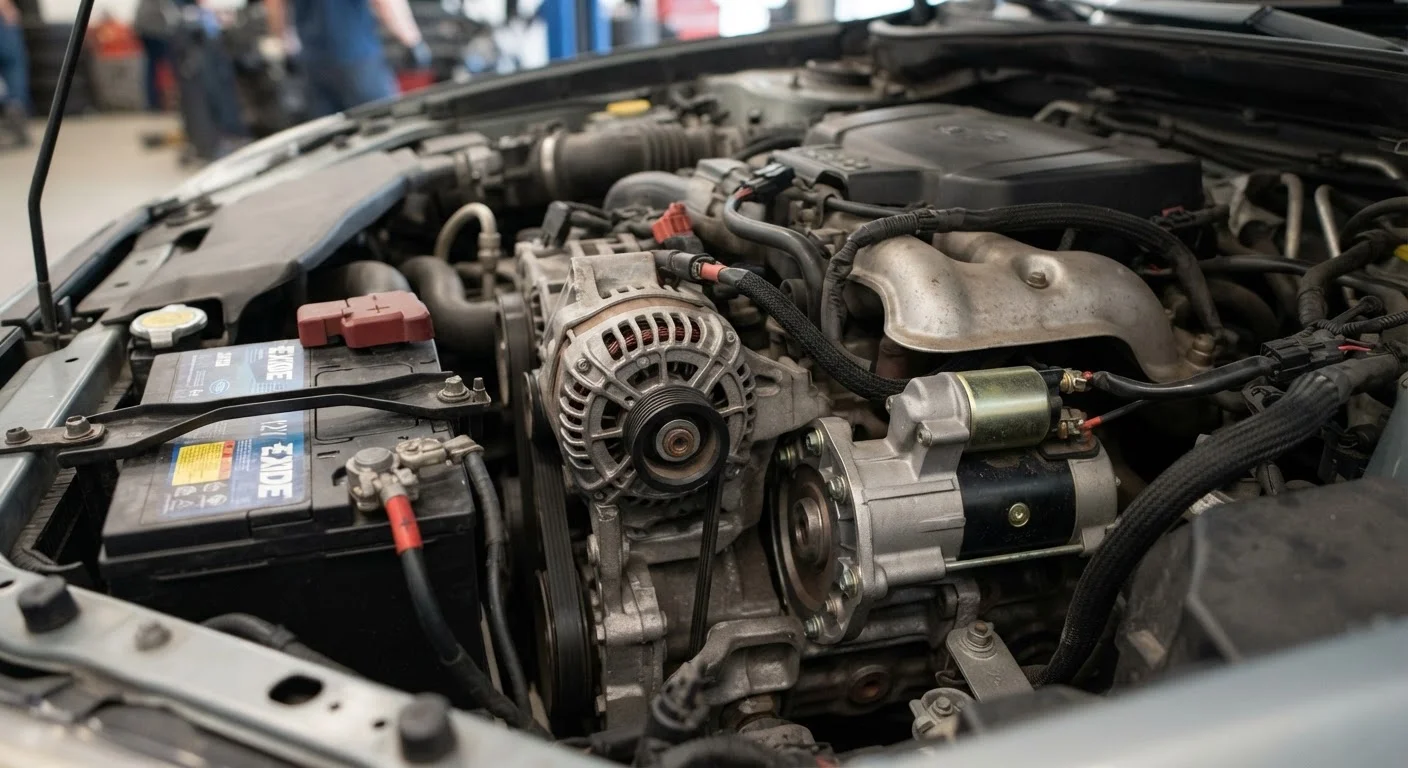
The Battery: Your Car's Power Reserve
Think of the battery as a rechargeable reservoir of electrical energy. When you turn the ignition key or press the start button, the battery delivers a large, concentrated burst of current to the starter motor - enough to spin the engine over from a dead stop. It also powers your lights, radio, and other electronics when the engine is off.
A car battery is a 12-volt lead-acid unit made up of six cells. Its capacity is rated in cold cranking amps (CCA) - the amount of current it can deliver at 0°F for 30 seconds. This rating matters most in cold climates, where batteries work hardest.
Common signs of a failing battery include:
- Slow or sluggish engine cranking
- Electrical accessories behaving erratically
- A battery warning light on the dashboard
- The car not starting after sitting for a day or two
Batteries degrade gradually. Heat accelerates internal corrosion; cold reduces the chemical reaction that generates power. If your battery is more than three years old and you're experiencing starting issues, testing it should be the first step.
Check Battery Terminals First
Before assuming a battery is dead, inspect the terminals for white or bluish corrosion buildup. Corroded terminals create resistance that prevents full current flow, mimicking a failed battery. Cleaning them with a wire brush can sometimes restore normal starting function immediately. This is a task most drivers can safely perform themselves with basic tools.
The Alternator: Your Engine's Built-In Generator
Once the engine is running, the alternator takes over as the primary power source. Driven by a belt connected to the engine's crankshaft, the alternator generates alternating current (AC), which an internal rectifier converts to the direct current (DC) your car's systems need. It simultaneously powers the vehicle's electrical load and recharges the battery.
A healthy alternator typically produces between 13.5 and 14.5 volts at the battery terminals while the engine runs. Below that range, the battery won't charge properly. Above it, you risk damaging sensitive electronics.
Signs that an alternator may be failing include:
- A battery or alternator warning light
- Headlights that dim at idle and brighten when you rev the engine
- A new or recently charged battery that keeps going dead
- Unusual whining or grinding sounds from the engine bay
Parasitic Drain: A Hidden Culprit
If your battery repeatedly goes dead overnight without obvious cause, the problem may not be the battery or alternator - it may be a parasitic drain. This occurs when a circuit draws power from the battery even with the ignition off. Common sources include a malfunctioning module, an interior light that doesn't switch off, or an aftermarket accessory wired incorrectly. A mechanic can perform a parasitic draw test to identify the source.
Because a failing alternator mimics the symptoms of a bad battery, mechanics typically test both together. Replacing only the battery when the alternator is also faulty is a common and costly mistake.
The Starter: The Engine's Mechanical Kick-Start
The starter motor is a small but powerful electric motor mounted near the base of the engine. When you turn the key, the battery sends current to the starter's solenoid - a magnetic switch that simultaneously connects the starter to full battery power and extends a small gear (called a pinion) to mesh with the engine's flywheel. This spins the engine fast enough for combustion to begin.
Once the engine fires, the pinion retracts automatically. The whole process takes less than a second in a healthy system.
Warning signs of a starter problem include:
- A single loud click when turning the key, with no cranking
- The engine cranks intermittently - starts sometimes, not others
- A grinding noise during startup (the pinion gear may be worn)
- Smoke or a burning smell near the starter when attempting to start
Starter failures are less common than battery issues but more expensive to address, since the component is often located in a hard-to-reach part of the engine bay. A qualified mechanic can perform a starter draw test to confirm the diagnosis before any work begins.
How to Approach a Diagnosis
Because the three components are interdependent, a methodical approach saves time and money. Mechanics typically follow this sequence:
- Test the battery first. A load test (not just a voltage check) reveals whether the battery can actually deliver adequate current under real conditions.
- Test the alternator output. With the engine running, a multimeter at the battery terminals confirms whether the alternator is charging properly.
- Test starter draw. An ammeter measures how much current the starter pulls during cranking. Excessive draw indicates internal wear.
Many auto parts stores offer free battery and alternator testing, which can be a useful first step. However, a professional inspection is advisable before replacing any parts - misdiagnosis is common, and starters and alternators aren't inexpensive.
~50%
Of no-start calls attributed to battery failure
Industry roadside assistance data consistently shows battery-related failures account for roughly half of all no-start service calls.
3-5 years
Average automotive battery lifespan
Most battery manufacturers and automotive industry sources cite three to five years as the typical service life under normal driving conditions.
13.5-14.5V
Healthy alternator output range
A properly functioning alternator should maintain this voltage range at the battery terminals with the engine running, per standard automotive electrical specifications.
Understanding what each component does helps you describe symptoms accurately to a mechanic, ask the right questions, and make a more informed decision about repairs - without needing to be an automotive engineer to do it.
Frequently Asked Questions
A failing battery often causes slow cranking or a no-start after the car has sat overnight. A failing alternator typically causes a battery warning light, dimming headlights while driving, or a battery that keeps going dead even after being charged. A mechanic can test both with a simple voltmeter or dedicated load tester.
Yes. If the alternator isn't generating enough voltage to recharge the battery while you drive, even a brand-new battery will eventually drain completely. Always have the alternator tested before replacing a battery that keeps going dead.
A rapid clicking noise usually means the battery doesn't have enough power to engage the starter properly. A single loud click may indicate a faulty starter solenoid. Both warrant a diagnostic check of the battery and starter system.
Most automotive batteries last between three and five years under normal conditions. Extreme heat or cold, frequent short trips, and leaving lights on can shorten battery life significantly.
Occasional jump-starts are fine, but needing one repeatedly signals an underlying problem - usually a failing battery, alternator, or a parasitic drain. Have the system inspected rather than relying on jump-starts as a long-term solution.
Basic battery voltage can be checked with an inexpensive multimeter - a healthy, resting battery reads around 12.6 volts. However, full load testing of the battery, alternator output, and starter draw typically requires specialized equipment best handled by a mechanic or auto parts store with a free testing service.
The content on this site is provided for informational purposes only and should not be considered a substitute for professional advice. While we strive to provide accurate and up-to-date information, we make no guarantees regarding its completeness or accuracy. Always consult a qualified professional for advice specific to your circumstances before making any decisions.