

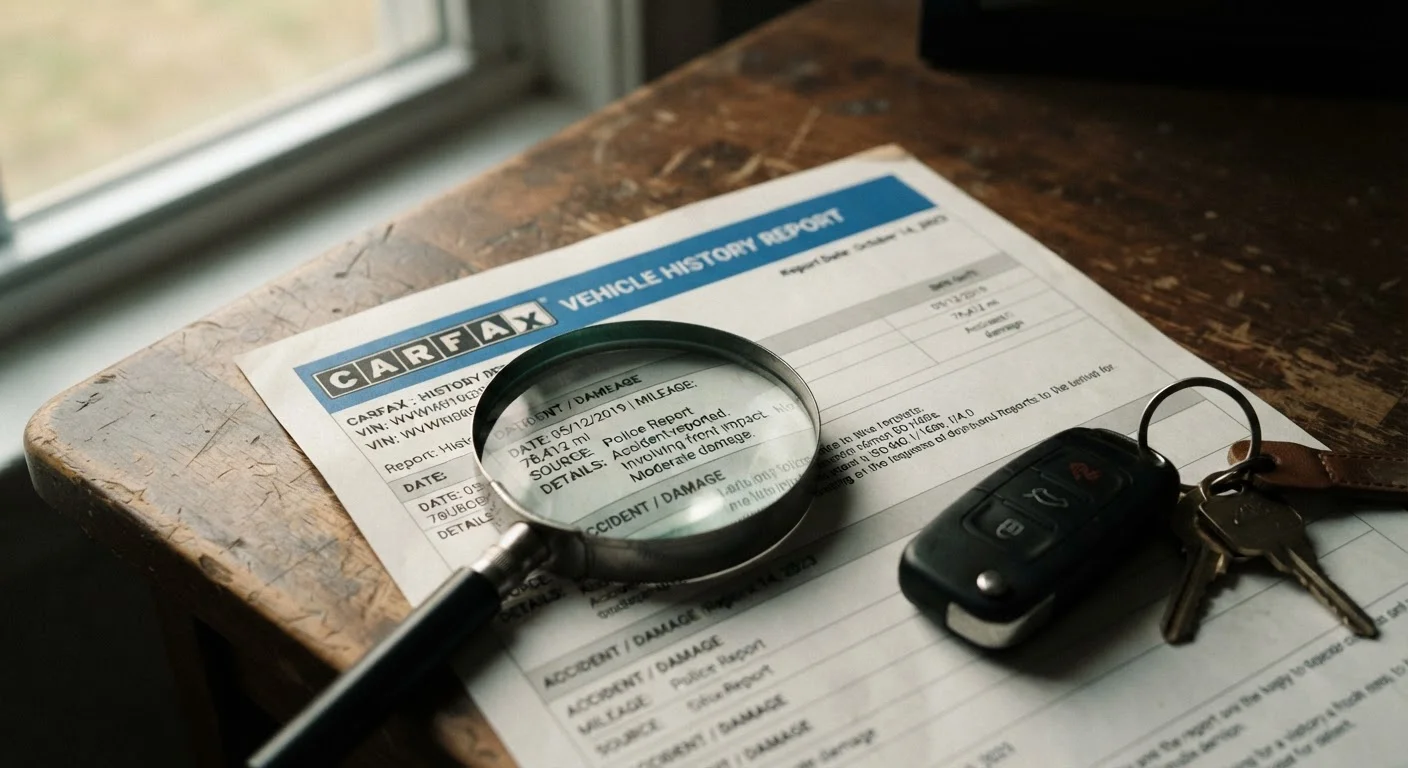
What a Vehicle History Report Actually Contains
A vehicle history report pulls together records from state DMVs, insurance companies, auto auctions, repair facilities, and federal databases into a single document tied to a vehicle's VIN. Understanding what each section means - and what it can miss - is the foundation for using it effectively.
The report is organized around several key data categories: title history, accident and damage disclosures, odometer readings, ownership timeline, and service records when available. Each category tells a different part of the car's story, and gaps in any of them deserve scrutiny. As part of your broader used car verification checklist, the vehicle history report is your starting point - not your finish line.
What you will need
Step-by-Step: Reading the Report Without Missing Critical Signals
Work through the report systematically rather than scanning for obvious red flags. Subtle patterns - such as a two-year gap in service records or odometer readings that jump backward - often reveal more than clearly flagged events.
Confirm the VIN Matches the Vehicle
Before reading a single line of the report, verify that the VIN on the report matches the VIN physically on the car. Check the dashboard plate (visible through the windshield on the driver's side), the door jamb sticker, and the title document. A mismatch - even a single character - means the report describes a different vehicle entirely.
Examine the Title Brand History
Title brands are legal designations assigned by state DMVs that follow a vehicle permanently. The most consequential ones include:
- Salvage: The vehicle was declared a total loss by an insurer. Even after repair, it may have structural integrity issues and will typically be worth significantly less at resale.
- Flood/Water damage: Water intrusion - especially into electrical systems - causes corrosion problems that can take years to manifest and are extremely difficult to fully remediate.
- Rebuilt/Reconstructed: A previously salvaged vehicle that passed a state inspection. The inspection standard varies widely by state and does not guarantee roadworthiness over time.
- Lemon law buyback: A manufacturer repurchased the vehicle due to unresolved defects. The underlying problem may or may not have been fixed.
Any title brand is a significant finding. It does not automatically disqualify a vehicle, but it requires full disclosure from the seller and should substantially affect the price you're willing to pay.
Evaluate Accident and Damage Records
Not all accidents are equal. A minor parking lot fender-bender that was repaired cosmetically is very different from a front-end collision that involved airbag deployment or frame damage. When reviewing accident records, focus on:
- Damage severity: Look for terms like 'major damage,' 'airbag deployment,' or 'frame/unibody damage.' These indicate high-energy impacts with potential lasting structural effects.
- Which area of the vehicle was affected: Rear-quarter damage is generally less concerning than front-end or side-impact damage that could affect crumple zones or the cabin.
- Whether repairs were documented: An accident with no corresponding repair record raises the question of whether repairs were done properly - or at all.
Check Odometer Readings for Discrepancies
Vehicle history reports compile odometer readings from inspections, registrations, and service visits over time. Read these chronologically and look for any reading that is lower than a prior reading - this is the hallmark of odometer rollback, a form of fraud that misrepresents mileage to inflate the vehicle's apparent value and mask wear.
Also note large unexplained gaps between readings. If a vehicle has no recorded readings for two or three years, it may have been operating without registration, repaired off the books, or involved in activity the seller doesn't want disclosed.
Analyze the Ownership Timeline
The number of previous owners and how long each held the vehicle tells its own story. A single long-term owner who serviced the vehicle regularly is a favorable sign. Multiple short-term owners - especially consecutive ones spanning only a few months each - can indicate a car that kept surfacing problems and being passed along.
Also note what type of use is recorded. Fleet or rental use means the vehicle was driven by many different operators with varying habits, often with deferred maintenance between service intervals. This isn't disqualifying, but it affects expected wear.
Review Service and Inspection Records
Where available, service records show whether routine maintenance was performed at reasonable intervals. Look for oil changes, brake service, and major scheduled maintenance aligned with the vehicle's mileage. Consistent service at a single shop often indicates a conscientious owner. Erratic or absent service records don't mean the work wasn't done - many owners use independent mechanics or do-it-yourself maintenance that doesn't get reported - but they reduce your ability to verify the car's upkeep.
This step pairs naturally with the broader pre-purchase verification process that responsible buyers should complete before any significant used vehicle transaction.
What the Report Cannot Tell You
Vehicle history reports are only as complete as the data submitted to them. Private-party repairs, cash transactions, and incidents that were never reported to insurance companies leave no trace. A report showing no accidents does not guarantee the car was never in one - it means no accident was reported through a participating channel.
Report Gaps Are Not the Same as a Clean History
A vehicle history report with no reported incidents could mean the car truly has a clean past - or it could mean incidents simply weren't reported into participating databases. Unreported accidents, private-party repairs, and cash-settled fender-benders leave no digital trace. Always treat the absence of reported problems as 'nothing flagged,' not 'nothing happened.'
Mechanical condition is almost entirely absent from these reports. A car can have a spotless history and still have a worn transmission, leaking gaskets, or deferred maintenance that will cost thousands to address. That's why every used vehicle purchase should include an independent inspection by a qualified mechanic before money changes hands. For an understanding of what else can surface unexpectedly after purchase, see our overview of car maintenance fundamentals.
Use the vehicle history report to narrow your decision and prepare your questions - then let a hands-on mechanical inspection confirm or override what the data says.
Let the Report Guide Your Inspection, Not Replace It
Use your findings from the vehicle history report to create specific questions for a pre-purchase mechanical inspection. If the report shows a prior front-end collision, ask the mechanic to pay close attention to the frame, radiator support, and suspension geometry. A targeted inspection is far more valuable than a generic one.
The content on this site is provided for informational purposes only and should not be considered a substitute for professional advice. While we strive to provide accurate and up-to-date information, we make no guarantees regarding its completeness or accuracy. Always consult a qualified professional for advice specific to your circumstances before making any decisions.